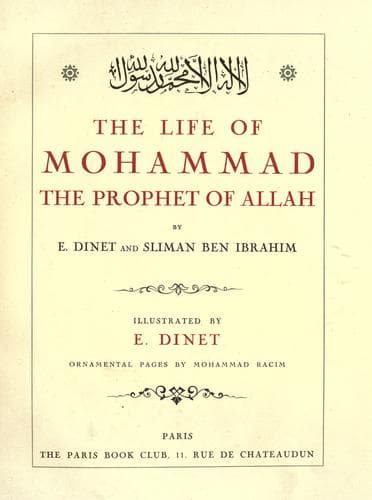
The Life of Mohammad, the Prophet of AllahDinet, Etienne
Religion
The Life of Mohammad, the Prophet of Allah
Dinet, Etienne
Muhammad, Prophet, -632
Following the Prophet's first sermons, the Faithful sought no longer
to hide their belief; but, to avoid useless disputes, they held
clandestine meetings in a desert ravine where they said their prayers.
A group of idolaters dogged their footsteps and having succeeded in
discovering their retreat, lavished foul epithets on them. The
Believers, unable to put up with the insults offered to their
religion, grew furious and a fight took place, during which Sad ibn
Abi Waqqs picked up the jawbone of a camel's skeleton in the sand and
dashed it violently in the face of one of the Associates, causing the
vital fluid to flow. These were the first drops of blood shed in the
struggle now beginning between Islam and idolatry.
Wishing to prevent a renewal of these incidents, the Prophet resolved
to retreat to pray in peace with his disciples in the house of Arqam,
situated on the Sufah hill. Nevertheless, fury increased among the
idol-worshippers. So long as Mohammad had gone no further than to
summon them to salvation, even blaming them and threatening them with
the punishment of divine wrath, his adversaries merely shrugged their
shoulders and laughed at him; but when he retaliated by turning their
wooden or stone images into ridicule, pointing out that they were
dumb, deaf, blind and powerless, the rage of the idolaters was
unbounded. Not only did he sting them to the quick through attacking
their beliefs, but he did them great harm commercially, for in the
hands of leading citizens, the idols were a source of considerable
revenue, and constituted efficacious means of domination over the
superstitious common people.
Alone, among the men of his party who had refused to embrace the
Islamic faith, his uncle, Abu Talib, still gave him proofs of
affection, thus greatly scandalising the other members of the Quraish
tribe, who sent him a deputation of the most influential among them:
Utbah ibn Rabiyah, Abu Sufyan ibn Harib, Abu Jahal and several
chieftains of equal note.
'O Abu Talib!' said these delegates, 'your brother's son insulteth our
gods and our beliefs. He mocketh at the religion and traditions of our
forefathers. Shall we not rid ourselves of him? Or wilt thou not
remain neutral and thus let us be free to act towards him as we think
fit? For we know that thou dost not share his convictions any more
than we do.' Abu Talib dismissed them with a polite and conciliatory
reply.
Public-domain text, read in full here on John Shaqi.
Reviews
Reviews
No reviews yet
Be the first to share your thoughts on this work.
Join the Discussion
Join the discussion
Sign in to leave a comment or review.
Sign InorCreate an account