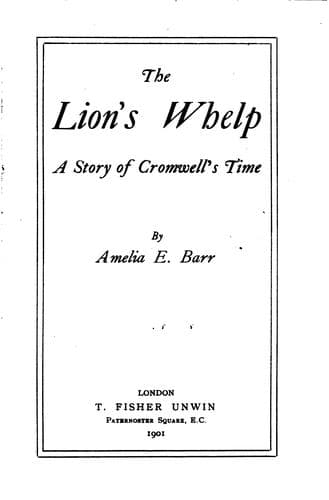
The Lion's Whelp: A Story of Cromwell's TimeBarr, Amelia E.
History
The Lion's Whelp: A Story of Cromwell's Time
Barr, Amelia E.
Great Britain -- History -- Stuarts, 1603-1714 -- Fiction
The words came without intent. He caught his breath with fear when he
realised his presumption, for Jane stood silent and trembling, and he
did not at first understand that it was for joy which she hardly
comprehended and did not at once know how to express. But the heart is
a ready scholar when love teaches, and as they slowly passed through the
fields of yellow fulness, finding their happy way among the standing
sheaves, Jane heard and understood that heavenly tale which Cluny knew
so well how to tell her. The moon’s face, warm and passionate, shed her
tender influence over them, and their hearts grew great and loving in
it. For this one hour the bewitching moonlight of _The Midsummer
Night’s Dream_ was theirs, and they did well to linger in it, and to
fill their souls with its wondrous radiance. None just as heavenly
would ever shine for them again; never again, oh, surely never again,
would they thread the warm, sweet harvest fields, and feel so little
below the angels!
Not until they reached Swaffham did they remember that they two were not
the whole round world. But words of care and wonder and eager inquiry
about war, and rumour of war, soon broke the heavenly trance of feeling
in which they had found an hour of Paradise. Mrs. Swaffham was
exceedingly anxious. The country was full of frightsome expectations.
Reports of Charles Stuart’s invasion of England were hourly growing more
positive. Armed men were constantly passing northward, and no one could
accurately tell what forces they would have to meet. It was said that
Charles had not only the Highland Clans, but also Irish, French and
Italian mercenaries; and that foreign troops had received commissions to
sack English towns and villages, in order to place a popish king upon
the throne. For there were not any doubts as to Charles Stuart’s
religious predilections. His taking of the Covenant was known to be a
farce, at which he privately laughed, and the most lenient judged him a
Protestant, lined through and through with Popery.
So the blissful truce was over, and Jane and Cluny were part of the
weary, warring, working world again. Cluny knew nothing which could
allay fear. He had just come from London, and he said—"The city is
almost in panic; many are even suspecting the fidelity of Cromwell, and
asking why he has permitted Charles Stuart to escape his army. And yet
Cromwell sent by me a letter urging Parliament to get such forces as
they had in readiness to give the enemy some check until he should be
able to reach up to him. And still he added, as the last words, that
trust in the Lord which is his constant battle-cry. How can England
fear with such a General to lead her army?"
"And what of the General’s family?" asked Mrs. Swaffham, "are they not
afraid?"
Public-domain text, read in full here on John Shaqi.
Reviews
Reviews
No reviews yet
Be the first to share your thoughts on this work.
Join the Discussion
Join the discussion
Sign in to leave a comment or review.
Sign InorCreate an account