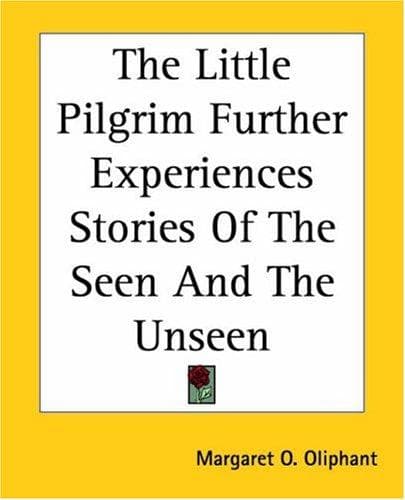
The Little Pilgrim: Further Experiences.: Stories of the Seen and the Unseen. — John Shaqi
The Little Pilgrim: Further Experiences.: Stories of the Seen and the Unseen.Oliphant, Mrs. (Margaret)
Religion
The Little Pilgrim: Further Experiences.: Stories of the Seen and the Unseen.
Oliphant, Mrs. (Margaret)
Death -- Fiction
It happened to them suddenly to perceive in their way a man returning
home. These are words that are sweet to all who have lived upon the earth
and known its ways; but far, far were they from that meaning which is
sweet. The dark hours had passed, and men had slept; and the night was
over. The sun was rising in the sky, which was keen and clear with the
pleasure of the morning. The air was fresh with the dew, and the birds
awaking in the trees, and the breeze so sweet that it seemed to blow from
heaven; and to the two travellers it seemed almost in the joy of the new
day as if the Lord had already come. But here was one who proved that it
was not so. He had not slept all the night, nor had night been silent to
him nor dark, but full of glaring light and noise and riot; his eyes were
red with fever and weariness, and his soul was sick within him, and the
morning looked him in the face and upbraided him as a sister might have
upbraided him, who loved him. And he said in his heart, as one had said
of old, that all was vanity; that it was vain to live, and evil to have
been born; that the day of death was better than the day of birth, and
all was delusion, and love but a word, and life a lie. His footsteps on
the road seemed to sound all through the sleeping world; and when he
looked the morning in the face he was ashamed, and cursed the light. The
two went after him into a silent house, where everybody slept. The light
that had burned for him all night was sick like a guilty thing in the eye
of day, and all that had been prepared for his repose was ghastly to him
in the hour of awaking, as if prepared not for sleep but for death. His
heart was sick like the watch-light, and life flickered within him with
disgust and disappointment. For why had he been born, if this were
all?--for all was vanity. The night and the day had been passed in
pleasure, and it was vanity; and now his soul loathed his pleasures, yet
he knew that was vanity too, and that next day he would resume them as
before. All was vain,--the morning and the evening, and the spirit of man
and the ways of human life. He looked himself in the face and loathed
this dream of existence, and knew that it was naught. So much as it had
cost to be born, to be fed, and guarded and taught and cared for, and all
for this! He said to himself that it was better to die than to live, and
never to have been than to be.
Public-domain text, read in full here on John Shaqi.
Reviews
Reviews
No reviews yet
Be the first to share your thoughts on this work.
Join the Discussion
Join the discussion
Sign in to leave a comment or review.
Sign InorCreate an account