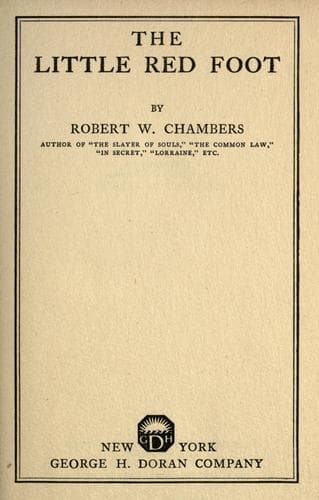
The Little Red FootChambers, Robert W. (Robert William)
History
The Little Red Foot
Chambers, Robert W. (Robert William)
New York (State) -- History -- Revolution, 1775-1783 -- Fiction
The Long House, in ruins, rang with the frantic wailing of four fierce
nations. The Senecas screamed in their pain from the Western Gate; the
Cayugas and Onondagas were singing the death song of their nations; the
proud Keepers of the Eastern Gate, driven headlong into exile, gathered
like bleeding panthers on the frontier, their glowing gaze intent and
patient, watching the usurpers and marking them for vengeance and
destruction.
To me, personally, the conflict in my Northland had become unutterably
horrible.
Our battles in the Jerseys, in Pennsylvania, in Delaware, and farther
south, held for me no such horror and repugnance; for if the panoply of
war be dreadful, its pomp and circumstance make it endurable and to be
understood by human beings.
But to me there was something terrifying in secret ambush and ghastly
massacre amid the eternal twilight of the Northern wilderness, where
painted men stole through still places, intent on murder; where death
was swift and silent, where all must watch and none dared rest; where
children wept in their sleep, and mothers lay listening all night long,
and hollow-eyed men cut their corn with sickle in one hand and rifle in
the other.
We, in the Jerseys, watching red-coat and Hessian, heard of scalps taken
in the North from babies lying in their cradles--aye, the very watch-dog
at the gate was scalped; and painted Tories threw their victims over
rail fences to hang there, disembowelled, like dead game.
We heard terrible and inhuman tales of Simon Girty, of Benjy Beacraft,
of Billy Newbury--all old neighbours of mine, and now turned
child-killers and murderers of helpless women--all painted men, now,
ferocious and without mercy.
But these men had never been more than ignorant peasants and dull
tillers of the soil for thriftier masters. Yet they were no crueller
than others of birth and education. And what was I to think of Walter
Butler and other gentlemen of like condition,--officers who had
delivered Tom Boyd of Derry to the Senecas,--Colonel Paris to the
Mohawks!
The day we heard that Sergeant Newbury and Henry Hare were taken, I
thanked God on my knees. And when our General Clinton hung them both for
human monsters as well as spies, then I thanked God again.... And wrote
tenderly to Claudia, poor misguided girl!--condoling with her--not for
her grief and the death of Henry Hare[45]--but that the black disgrace
of it should so nearly touch and soil her.
[Footnote 45: In the writer's possession is a letter written by the
widow of Lieutenant Hare, retailing the circumstances of his execution
and praying for financial relief from extreme poverty. General Sir
Frederick Haldimand indorses the application in his own handwriting and
recommends a pension. The widow mentions her six little children.]
Public-domain text, read in full here on John Shaqi.
Reviews
Reviews
No reviews yet
Be the first to share your thoughts on this work.
Elsewhere in the archive
Join the Discussion
Join the discussion
Sign in to leave a comment or review.
Sign InorCreate an account