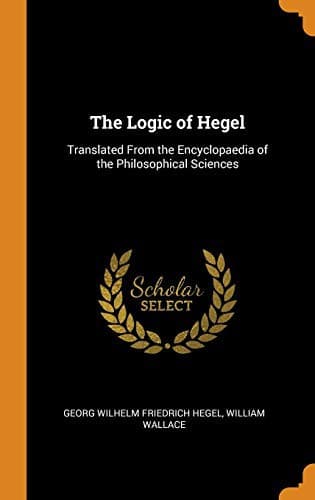
In the second edition, which substantially fixed the form of the
_Encyclopaedia_, the pages amount to xlii, 534--nearly twice as many
as the first, which, however, as Professor Caird remarks, 'has a
compactness, a brief energy and conclusiveness of expression, which
he never surpassed.' The Logic now occupies pp. 1214, Philosophy of
Nature 215-354, and Philosophy of Spirit from 355-534. The second part
therefore has gained least; and in the third part the chief single
expansions occur towards the close and deal with the relations of
philosophy, art, and religion in the State; viz. § 563 (which in the
third edition is transposed to § 552), and § 573 (where two pages are
enlarged to 18). In the first part, or the Logic, the main increase
and alteration falls within the introductory chapters, where 96 pages
take the place of 30. The Vorbegriff (preliminary notion) of the first
edition had contained the distinction of the three logical 'moments'
(see p. 142), with a few remarks on the methods, first, of metaphysic,
and then (after a brief section on empiricism), of the 'Critical
Philosophy through which philosophy has reached its close.' Instead
of this the second edition deals at length, under this head, with the
three 'attitudes (or positions) of thought to objectivity;' where,
besides a more lengthy criticism of the Critical philosophy, there is a
discussion of the doctrines of Jacobi and other Intuitivists.
The Preface, like much else in this second edition, is an assertion
of the right and the duty of philosophy to treat independently of
the things of God, and an emphatic declaration that the result of
scientific investigation of the truth is, not the subversion of
the faith, but 'the restoration of that sum of absolute doctrine
which thought at first would have put behind and beneath itself--a
restoration of it however in the most characteristic and the freest
element of the mind.' Any opposition that may be raised against
philosophy on religious grounds proceeds, according to Hegel, from a
religion which has abandoned its true basis and entrenched itself in
formulae and categories that pervert its real nature. 'Yet,' he adds
(p. vii), 'especially where religious subjects are under discussion,
philosophy is expressly set aside, as if in that way all mischief were
banished and security against error and illusion attained;' ... 'as if
philosophy--the mischief thus kept at a distance--were anything but
the investigation of Truth, but with a full sense of the nature and
value of the intellectual links which give unity and form to all fact
whatever.' 'Lessing,' he continues (p. xvi), 'said in his time that
people treat Spinoza like a dead dog[11]. It cannot be said that in
recent times Spinozism and speculative philosophy in general have been
better treated.'
Public-domain text, read in full here on John Shaqi.
Reviews
Reviews
No reviews yet
Be the first to share your thoughts on this work.
Join the Discussion
Join the discussion
Sign in to leave a comment or review.
Sign InorCreate an account