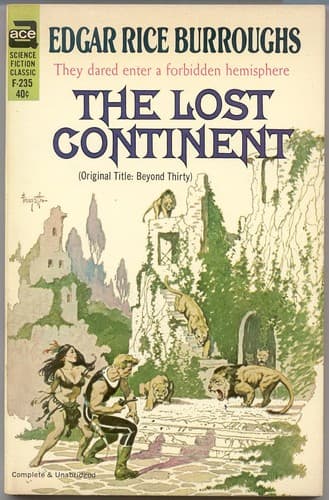
England -- Fiction; Fantasy fiction; Science fiction
“His majesty left for Tunbridge Wells today, he ... jesty was stricken
... terday. God give she does not die ... am military governor of Lon
...”
And farther on:
“It is awful ... hundred deaths today ... worse than the bombardm ...”
Nearer the end I picked out the following:
“I promised his maj ... e will find me here when he ret ... alone.”
The most legible passage was on the next page:
“Thank God we drove them out. There is not a single ... man on British
soil today; but at what awful cost. I tried to persuade Sir Phillip to
urge the people to remain. But they are mad with fear of the Death, and
rage at our enemies. He tells me that the coast cities are packed ...
waiting to be taken across. What will become of England, with none left
to rebuild her shattered cities!”
And the last entry:
“... alone. Only the wild beasts ... A lion is roaring now beneath the
palace windows. I think the people feared the beasts even more than
they did the Death. But they are gone, all gone, and to what? How much
better conditions will they find on the continent? All gone—only I
remain. I promised his majesty, and when he returns he will find that I
was true to my trust, for I shall be awaiting him. God save the King!”
That was all. This brave and forever nameless officer died nobly at his
post—true to his country and his king. It was the Death, no doubt, that
took him.
Some of the entries had been dated. From the few legible letters and
figures which remained I judge the end came some time in August, 1937,
but of that I am not at all certain.
The diary has cleared up at least one mystery that had puzzled me not a
little, and now I am surprised that I had not guessed its solution
myself—the presence of African and Asiatic beasts in England.
Acclimated by years of confinement in the zoological gardens, they were
fitted to resume in England the wild existence for which nature had
intended them, and once free, had evidently bred prolifically, in
marked contrast to the captive exotics of twentieth century
Pan-America, which had gradually become fewer until extinction occurred
some time during the twenty-first century.
The palace, if such it was, lay not far from the banks of the Thames.
The room in which we were imprisoned overlooked the river, and I
determined to attempt to escape in this direction.
To descend through the palace was out of the question, but outside we
could discover no lions. The stems of the ivy which clambered upward
past the window of the room were as large around as my arm. I knew that
they would support our weight, and as we could gain nothing by
remaining longer in the palace, I decided to descend by way of the ivy
and follow along down the river in the direction of the launch.
Public-domain text, read in full here on John Shaqi.
Reviews
Reviews
No reviews yet
Be the first to share your thoughts on this work.
Join the Discussion
Join the discussion
Sign in to leave a comment or review.
Sign InorCreate an account