At times, in our work, we all tried our hands at describing the
Salonika of those early days of the Allied occupation, for it was
really what one widely travelled British officer called it--"the most
amazingly interesting situation I've ever seen"---but Davis's
description was far and away the best, just as his description of Vera
Cruz was the best, and his wonderful story of the entry of the German
army into Brussels was matchless as one of the great pieces of
reporting in the present war.
In thinking of Davis, I shall always remember him for the delightful
qualities which he showed in Salonika. He was unfailingly considerate
and thoughtful. Through his narratives one could see the pride which
he took in the width and breadth of his personal relation to the great
events of the past twenty years. His vast scope of experiences and
equally wide acquaintanceship with the big figures of our time, were
amazing, and it was equally amazing that one of such a rich and
interesting history could tell his stories in such a simple way that
the personal element was never obtrusive.
When he left Salonika he endeavored to obtain permission from the
British staff to visit Moudros, but, failing in this, he booked his
passage on a crowded little Greek steamer, where the only obtainable
accommodation was a lounge in the dining saloon. We gave him a farewell
dinner, at which the American consul and his family, with all the other
Americans then in Salonika, were present, and after the dinner we rowed
out to his ship and saw him very uncomfortably installed for his voyage.
He came down the sea ladder and waved his hand as we rowed away. That
was the last I saw of Richard Harding Davis.
JOHN T. MCCUTCHEON.
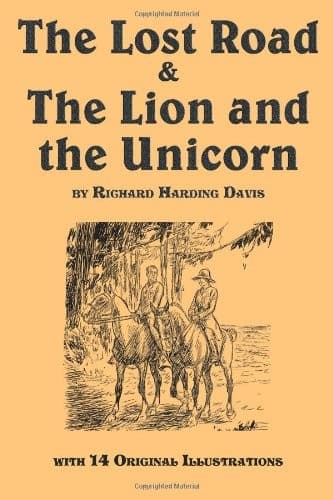
THE LOST ROAD
During the war with Spain, Colton Lee came into the service as a
volunteer. For a young man, he always had taken life almost too
seriously, and when, after the campaign in Cuba, he elected to make
soldiering his profession, the seriousness with which he attacked his
new work surprised no one. Finding they had lost him forever, his
former intimates were bored, but his colonel was enthusiastic, and the
men of his troop not only loved, but respected him.
From the start he determined in his new life women should have no
part--a determination that puzzled no one so much as the women, for to
Lee no woman, old or young, had found cause to be unfriendly. But he
had read that the army is a jealous mistress who brooks no rival, that
"red lips tarnish the scabbard steel," that "he travels the fastest who
travels alone."
Public-domain text, read in full here on John Shaqi.
Reviews
Reviews
No reviews yet
Be the first to share your thoughts on this work.
Join the Discussion
Join the discussion
Sign in to leave a comment or review.
Sign InorCreate an account