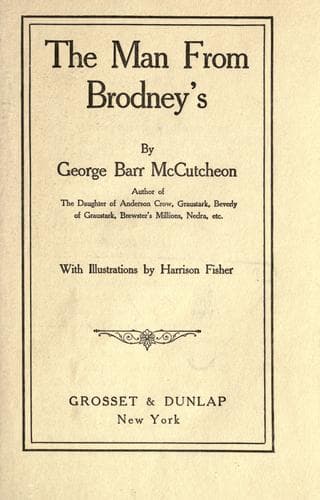
Inheritance and succession -- Fiction; Islands -- Fiction; Love stories; Nobility -- Fiction
Skaggs seldom went from one part of his home to another without a guide.
It was so vast and so labyrinthine that he feared he might become lost
forever. The dungeon below the château, and the moat with its bridges,
were the especial delight of these lonely, romantic old chaps. One of
the builders of this rare pile was now sleeping peacefully in the
sarcophagus beneath the chapel; the other was lying dead and
undiscovered in the very heart of his possessions. Their executors were
sourly wondering whether the two venerable testators were not even then
grinning from those far-away sepulchres in contemplation of the first
feud their unprimitive castle was to know.
The magnificent plans of the partners would have been a glorious tribute
to romance had it not been for one fatal obstacle. The trouble was that
neither young Miss Ruthven nor young Mr. Browne knew that their
grandfathers lived, much less that they owned an island in the South
Seas. Therefore it is quite natural that they could not have known they
were expected to marry each other. In complete but blissful ignorance
that the other existed, the young legatees fell in love with persons
unmentioned in the will and performed the highly commendable but
exceedingly complicating act of matrimony. This emergency, it is humane
to suspect, had not revealed itself to either of the grandfathers.
Miss Ruthven, from motives peculiar to the head and not to the heart,
set about to earn a title for herself. Three months before the death of
Mr. Skaggs she was married to Lord Deppingham, who possessed a title and
a country place that rightfully belonged to his creditors. Mr. Browne,
just out of college, hung out his shingle as a physician and surgeon,
and forthwith, with all the confidence his profession is supposed to
inspire, proceeded to marry the daughter of a brokerage banker in Boston
and at once found himself struggling with the difficulties of Back Bay
society.
A clause in the will, letter of instruction attached, demanded that the
two grandchildren should take up their residence in the château within
six months after the death of the testator, there to remain through the
compulsory days of courtship up to and including the wedding day. Four
months had already passed. It was also stipulated that the executors
should receive £10,000 each at the expiration of their year of
servitude, provided it was shown in court that they had carried out the
wishes of the testator, or, in failing, had made the most diligent
effort within human power.
"It is very explicit," murmured Mr. Hare, for the third time. "I suppose
the first step is to notify young Mr. Browne of his misfortune. His
lordship has the task of breaking the news to Lady Deppingham."
"You are assuming that I intend to act under this ridiculous will."
Public-domain text, read in full here on John Shaqi.
Reviews
Reviews
No reviews yet
Be the first to share your thoughts on this work.
Join the Discussion
Join the discussion
Sign in to leave a comment or review.
Sign InorCreate an account