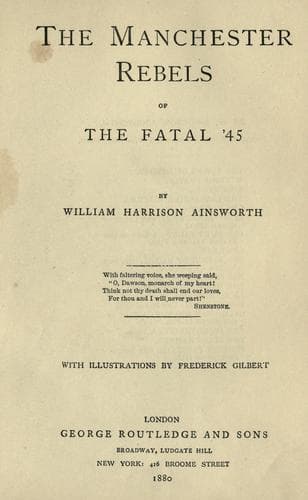
The Manchester Rebels of the Fatal '45Ainsworth, William Harrison
History
The Manchester Rebels of the Fatal '45
Ainsworth, William Harrison
Great Britain -- History -- George II, 1727-1760 -- Fiction; Jacobite Rebellion, 1745-1746 -- Fiction
The inhabitants of the different towns and villages through which
we have passed on our way to the metropolis have displayed great
animosity towards us, chiefly owing to the mischievous placards
which have been everywhere spread about by the Government. In
these placards the most monstrous charges are brought against us.
It is gravely asserted that if we had defeated the Duke of
Cumberland we meant to spit him alive and roast him. The bishops
were to be burnt at the stake like Ridley and Latimer, and all the
Protestant clergy massacred. That such absurd statements should
have obtained credence seems impossible; but it is certain they
have produced the effect designed, and that the minds of the
common folk have been violently inflamed, as we have learnt to our
cost, and as we may experience to a still greater extent when we
reach London.
Newgate.
You will tremble, dearest Monica, when you learn that I am now
immured in that dismal dungeon, the very name of which inspires
terror; and yet the prison is not so formidable as it has been
represented.
I have a small cell on the master's side, as it is termed, and
though the walls are of stone, the little window grated, and the
door barred, I have no right to complain. I am far from harshly
treated--indeed, every comfort I choose to pay for is allowed me.
Nor am I locked up in my cell, except at night.
A great stone hall is our place of resort during the day. There my
brother officers assemble, and there we are served--not with
prison fare, as you may imagine--but with as good provisions and
as good wine as we could obtain at a tavern. For breakfast we have
tea, coffee, or chocolate, according to choice--roast beef or
mutton for dinner--claret or canary to wash it down--and some of
my companions regale themselves after supper with a bowl of punch.
Smoking, also, is allowed, and indeed several of the prisoners
have pipes in their mouths all day long. From the stone hall a
passage communicates with a tap-room, where different beverages
are sold. Here the common malefactors repair, but happily they are
prevented from coming further. From what I have just stated you
will infer that we are not in that part of the gaol appropriated
to felons--though we are stigmatised as the worst of criminals;
but with a certain leniency, for which we ought to feel grateful,
we have been placed among the debtors.
Public-domain text, read in full here on John Shaqi.
Reviews
Reviews
No reviews yet
Be the first to share your thoughts on this work.
Elsewhere in the archive
Join the Discussion
Join the discussion
Sign in to leave a comment or review.
Sign InorCreate an account