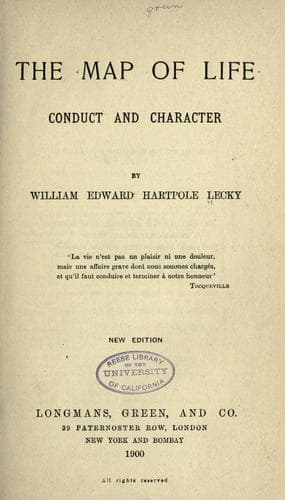
The Map of Life: Conduct and CharacterLecky, William Edward Hartpole
Philosophy
The Map of Life: Conduct and Character
Lecky, William Edward Hartpole
Character; Conduct of life
belated or superannuated charities formed to deal with circumstances or
sufferings that have in a large degree passed away--useless, or almost
useless, charities established to carry out some silly fad or to gratify
some silly vanity; sectarian charities intended to further ends which,
in the eyes of all but the members of one sect, are not only useless but
mischievous; charities that encourage thriftless marriages, or make it
easy for men to neglect obvious duties, or keep a semi-pauper population
stationary in employments and on a soil where they can never prosper, or
in other ways handicap, impede or divert the natural and healthy course
of industry. Illustrations of all these evils will occur to every
careful student of the subject. Unintelligent, thoughtless, purely
impulsive charity, and charity which is inspired by some other motive
than a real desire to relieve suffering, will constantly go wrong, but
every intelligent man can find without difficulty vast fields on which
the largest generosity may be expended with abundant fruit.
Hospitals and kindred institutions for alleviating great unavoidable
calamities, and giving the sick poor something of the same chances of
recovery as the rich, for the most part fall under this head. Money will
seldom be wasted which is spent in promoting kinds of knowledge,
enterprise or research that bring no certain remuneration proportioned
to their value; in assisting poor young men of ability and industry to
develop their special talents; in encouraging in their many different
forms thrift, self-help and co-operation; in alleviating the inevitable
suffering that follows some great catastrophe on land or sea, or great
transitions of industry, or great fluctuations and depressions in class
prosperity; in giving the means of healthy recreation or ennobling
pleasures to the denizens of a crowded town. The vast sphere of
education opens endless fields for generous expenditure, and every
religious man will find objects which, in the opinion not only of men of
his own persuasion, but also of many others, are transcendently
important. Nor is it a right principle that charity should be denied to
all calamities which are in some degree due to the fault of the
sufferer, or which might have been averted by exceptional forethought or
self-denial. Some economists write as if a far higher standard of will
and morals should be expected among the poor and the uneducated than can
be found among the rich. Good sense and right feeling will here easily
draw the line, abstaining from charities that have a real influence in
encouraging improvidence or vice, yet making due allowance for the
normal weaknesses of our nature.
Public-domain text, read in full here on John Shaqi.
Reviews
Reviews
No reviews yet
Be the first to share your thoughts on this work.
Elsewhere in the archive
Join the Discussion
Join the discussion
Sign in to leave a comment or review.
Sign InorCreate an account