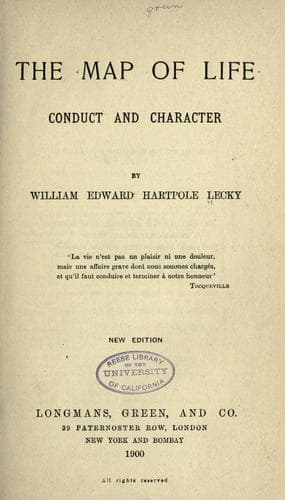
The Map of Life: Conduct and CharacterLecky, William Edward Hartpole
Philosophy
The Map of Life: Conduct and Character
Lecky, William Edward Hartpole
Character; Conduct of life
Such views are at least as far removed from truth as the roseate
pictures of Rousseau and St. Pierre. No one can look with an unjaundiced
eye upon the world without perceiving the enormous amount of
disinterested, self-sacrificing benevolence that pervades it; the
countless lives that are spent not only harmlessly and inoffensively but
also in the constant discharge of duties; in constant and often painful
labour for the good of others. The better section of the Utilitarian
school has fully recognised the truth that human nature is so
constituted that a great proportion of its enjoyment depends on
sympathy; or, in other words, on the power we possess of entering into
and sharing the happiness of others. The spectacle of suffering
naturally elicits compassion. Kindness naturally produces gratitude. The
sympathies of men naturally move on the side of the good rather than of
the bad. This is true not only of the things that immediately concern
us, but also in the perfectly disinterested judgments we form of the
events of history or of the characters in fiction and poetry. Great
exhibitions of heroism and self-sacrifice touch a genuine chord of
enthusiasm. The affections of the domestic circle are the rule and not
the exception; patriotism can elicit great outbursts of purely unselfish
generosity and induce multitudes to risk or sacrifice their lives for
causes which are quite other than their own selfish interests. Human
nature indeed has its moral as well as its physical needs, and naturally
and instinctively seeks some object of interest and enthusiasm outside
itself.
Public-domain text, read in full here on John Shaqi.
Reviews
Reviews
No reviews yet
Be the first to share your thoughts on this work.
Elsewhere in the archive
Join the Discussion
Join the discussion
Sign in to leave a comment or review.
Sign InorCreate an account