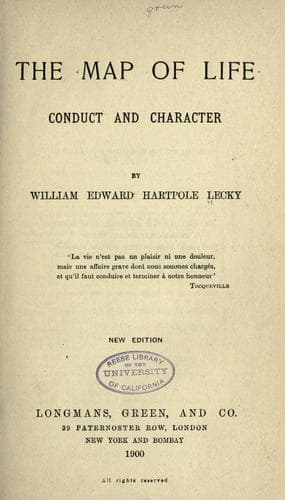
The Map of Life: Conduct and CharacterLecky, William Edward Hartpole
Philosophy
The Map of Life: Conduct and Character
Lecky, William Edward Hartpole
Character; Conduct of life
Then, too, we have to consider the great place which obstruction plays
in parliamentary government. It constantly happens that a measure to
which scarcely any one objects is debated at inordinate length for no
other reason than to prevent a measure which is much objected to from
being discussed. Measures may be opposed by hostile votes, but they are
often much more efficaciously opposed by calculated delays, by
multiplied amendments or speeches, by some of the many devices that can
be employed to clog the legislative machine. There are large classes of
measures on which governments or parliaments think it desirable to give
no opinion, or at least no immediate opinion, though they cannot prevent
their introduction, and many methods are employed with the real, though
not avowed and ostensible object of preventing a vote or even a
ministerial declaration upon them. Sometimes Parliament is quite ready
to acknowledge the abstract justice of a proposal, but does not think it
ripe for legislation. In such cases the second reading of the bill will
probably be accepted, but, to the indignation and astonishment of its
supporters outside the House, it will be obstructed, delayed or defeated
in committee with the acquiescence, or connivance, or even actual
assistance of some of those who had voted for it. Some measures in the
eyes of some members involve questions of principle so sacred that they
will admit of no compromise of expediency, but most measures are deemed
open to compromise and are accepted, rejected, or modified under some of
the many motives I have described.
Public-domain text, read in full here on John Shaqi.
Reviews
Reviews
No reviews yet
Be the first to share your thoughts on this work.
Elsewhere in the archive
Join the Discussion
Join the discussion
Sign in to leave a comment or review.
Sign InorCreate an account