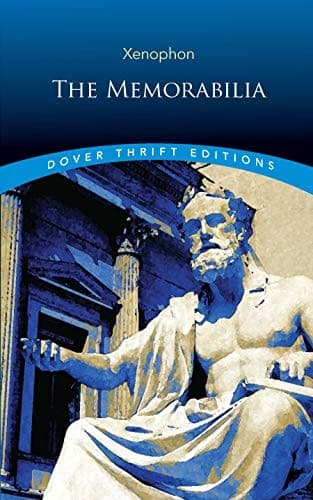
Classical literature; Philosophers, Ancient -- Biography -- Early works to 1800; Socrates -- Trials, litigation, etc. -- Early works to 1800
Euth. Most true, and if we had not got it we should, as far as our own
eyes could help us, be like men born blind.
Soc. And then, again, seeing that we stand in need of rest and
relaxation, they bestow upon us "the blessed balm of silent night." (6)
(6) {kalliston anapauterion}. The diction throughout is "poetical."
Yes (he answered), we are much beholden for that boon.
Soc. Then, forasmuch as the sun in his splendour makes manifest to us
the hours of the day and bathes all things in brightness, but anon night
in her darkness obliterates distinctions, have they not displayed aloft
the starry orbs, which inform us of the watches of the night, whereby we
can accomplish many of our needs? (7)
(7) e.g. for temple orientation see Dr. Penrose quoted by Norman
Lockyer, "Nature," August 31. 1893.
It is so (he answered).
Soc. And let us not forget that the moon herself not only makes clear to
us the quarters of the night, but of the month also?
Certainly (he answered).
Soc. And what of this: that whereas we need nutriment, this too the
heavenly powers yield us? Out of earth's bosom they cause good to spring
up (8) for our benefit; and for our benefit provide appropriate seasons
to furnish us in turn not only with the many and diverse objects of
need, but with the sources also of our joy and gladness? (9)
(8) Cf. Plat. "Laws," 747 D.
(9) Or, "pleasure."
Yes (he answered eagerly), these things bear token truly to a love for
man. (10)
(10) Cf. Plat. "Laws," 713 D; "Symp." 189 D. "These things are signs
of a beneficient regard for man."
Soc. Well, and what of another priceless gift, that of water, which
conspires with earth and the seasons to give both birth and increase to
all things useful to us; nay, which helps to nurture our very selves,
and commingling with all that feeds us, renders it more digestible, more
wholesome, and more pleasant to the taste; and mark you in proportion to
the abundance of our need the superabundance of its supply. What say you
concerning such a boon?
Euth. In this again I see a sign of providential care.
Soc. And then the fact that the same heavenly power has provided us with
fire (11)--our assistant against cold, our auxiliary in darkness, our
fellow-workman in every art and every instrument which for the sake of
its utility mortal man may invent or furnish himself withal. What of
this, since, to put it compendiously, there is nothing serviceable to
the life of man worth speaking of but owes its fabrication to fire? (12)
(11) Lit. "and then the fact that they made provision for us of even
fire"; the credit of this boon, according to Hesiod, being due to
Prometheus.
(12) Or, "no life-aiding appliance worthy of the name."
Euth. Yes, a transcendent instance of benevolent design. (13)
(13) Or, "Yes, that may be called an extreme instance of the divine
'philanthropy.'" Cf. Cic. "de N. D." ii. 62.
Public-domain text, read in full here on John Shaqi.
Reviews
Reviews
No reviews yet
Be the first to share your thoughts on this work.
Elsewhere in the archive
Join the Discussion
Join the discussion
Sign in to leave a comment or review.
Sign InorCreate an account