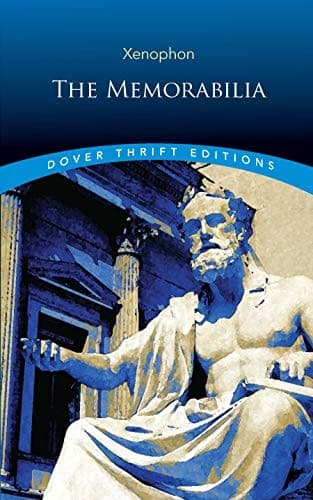
Classical literature; Philosophers, Ancient -- Biography -- Early works to 1800; Socrates -- Trials, litigation, etc. -- Early works to 1800
Soc. And as we reflect on the infinite beauty and utility and the
variety of nature, what are we to say of the fact that man has been
endowed with sensibilities which correspond with this diversity, whereby
we take our fill of every blessing; (17) or, again, this implanted
faculty of reasoning, which enables us to draw inferences concerning the
things which we perceive, and by aid of memory to understand how
each set of things may be turned to our good, and to devise countless
contrivances with a view to enjoying the good and repelling the evil; or
lastly, when we consider the faculty bestowed upon us of interpretative
speech, by which we are enabled to instruct one another, and to
participate in all the blessings fore-named: to form societies, to
establish laws, and to enter upon a civilised existence (18)--what are
we to think?
(17) Or, "Again, when we consider how many beautiful objects there are
serviceable to man, and yet how unlike they are to one another,
the fact that man has been endowed with senses adapted to each
class of things, and so has access to a world of happiness."
(18) Cf. Aristot. "Pol." III. ix. 5.
Euth. Yes, Socrates, decidedly it would appear that the gods do manifest
a great regard, nay, a tender care, towards mankind.
Soc. Well, and what do you make of the fact that where we are powerless
to take advantageous forethought for our future, at this stage they
themselves lend us their co-operation, imparting to the inquirer through
divination knowledge of events about to happen, and instructing him by
what means they may best be turned to good account?
Euth. Ay, and you, Socrates, they would seem to treat in a more friendly
manner still than the rest of men, if, without waiting even to be
inquired of by you, they show you by signs beforehand what you must, and
what you must not do. (19)
(19) See above, I. iv. 14, for a parallel to the train of thought on
the part of Aristodemus "the little," and of Euthydemus; and for
Socrates' {daimonion}, see above; Grote, "Plato," i. 400.
Public-domain text, read in full here on John Shaqi.
Reviews
Reviews
No reviews yet
Be the first to share your thoughts on this work.
Elsewhere in the archive
Join the Discussion
Join the discussion
Sign in to leave a comment or review.
Sign InorCreate an account