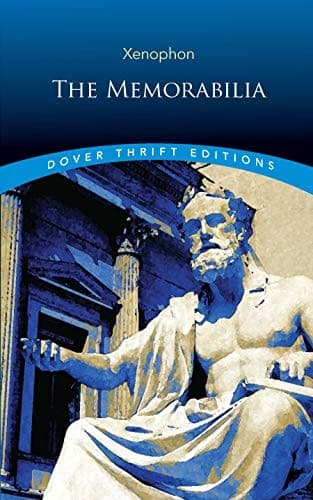
Classical literature; Philosophers, Ancient -- Biography -- Early works to 1800; Socrates -- Trials, litigation, etc. -- Early works to 1800
Perhaps enough has been said to explain the kind of intimacy which
had subsisted between Critias and Socrates, and their relation to one
another. But I will venture to maintain that where the teacher is not
pleasing to the pupil there is no education. Now it cannot be said of
Critias and Alcibiades that they associated with Socrates because they
found him pleasing to them. And this is true of the whole period. From
the first their eyes were fixed on the headship of the state as their
final goal. During the time of their intimacy with Socrates there were
no disputants whom they were more eager to encounter than professed
politicians.
Thus the story is told of Alcibiades--how before the age of twenty he
engaged his own guardian, Pericles, at that time prime minister of the
state, in a discussion concerning laws.
Alc. Please, Pericles, can you teach me what a law is?
Per. To be sure I can.
Alc. I should be so much obliged if you would do so. One so often hears
the epithet "law-abiding" applied in a complimentary sense; yet, it
strikes me, one hardly deserves the compliment, if one does not know
what a law is.
Per. Fortunately there is a ready answer to your difficulty. You wish to
know what a law is? Well, those are laws which the majority, being met
together in conclave, approve and enact as to what it is right to do,
and what it is right to abstain from doing.
Alc. Enact on the hypothesis that it is right to do what is good? or to
do what is bad?
Per. What is good, to be sure, young sir, not what is bad.
Alc. Supposing it is not the majority, but, as in the case of an
oligarchy, the minority, who meet and enact the rules of conduct, what
are these?
Per. Whatever the ruling power of the state after deliberation enacts as
our duty to do, goes by the name of laws.
Alc. Then if a tyrant, holding the chief power in the state, enacts
rules of conduct for the citizens, are these enactments law?
Per. Yes, anything which a tyrant as head of the state enacts, also goes
by the name of law.
Alc. But, Pericles, violence and lawlessness--how do we define them?
Is it not when a stronger man forces a weaker to do what seems right to
him--not by persuasion but by compulsion?
Per. I should say so.
Alc. It would seem to follow that if a tyrant, without persuading
the citizens, drives them by enactment to do certain things--that is
lawlessness?
Per. You are right; and I retract the statement that measures passed by
a tyrant without persuasion of the citizens are law.
Alc. And what of measures passed by a minority, not by persuasion of the
majority, but in the exercise of its power only? Are we, or are we not,
to apply the term violence to these?
Per. I think that anything which any one forces another to do without
persuasion, whether by enactment or not, is violence rather than law.
Public-domain text, read in full here on John Shaqi.
Reviews
Reviews
No reviews yet
Be the first to share your thoughts on this work.
Join the Discussion
Join the discussion
Sign in to leave a comment or review.
Sign InorCreate an account