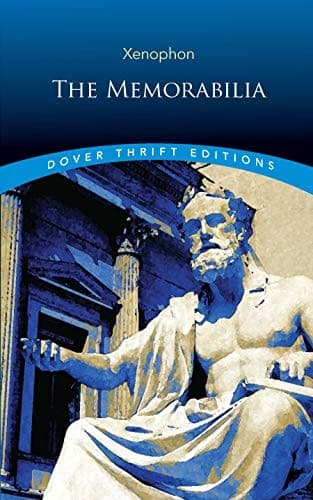
Classical literature; Philosophers, Ancient -- Biography -- Early works to 1800; Socrates -- Trials, litigation, etc. -- Early works to 1800
It may serve to illustrate the assertion that he benefited his
associates partly by the display of his own virtue and partly by verbal
discourse and argument, if I set down my various recollections (1)
on these heads. And first with regard to religion and the concerns of
heaven. In conduct and language his behaviour conformed to the rule laid
down by the Pythia (2) in reply to the question, "How shall we act?" as
touching a sacrifice or the worship of ancestors, or any similar point.
Her answer is: "Act according to the law and custom of your state, and
you will act piously." After this pattern Socrates behaved himself, and
so he exhorted others to behave, holding them to be but busybodies and
vain fellows who acted on any different principle.
(1) Hence the title of the work, {'Apomenmoneumata}, "Recollections,
Memoirs, Memorabilia." See Diog. Laert. "Xen." II. vi. 48.
(2) The Pythia at Delphi.
His formula or prayer was simple: "Give me that which is best for me,"
for, said he, the gods know best what good things are--to pray for gold
or silver or despotic power were no better than to make some particular
throw at dice or stake in battle or any such thing the subject of
prayer, of which the future consequences are manifestly uncertain. (3)
(3) See (Plat.) "Alcib. II." 142 foll.; Valerius Max. vii. 2;
"Spectator," No. 207.
If with scant means he offered but small sacrifices he believed that he
was in no wise inferior to those who make frequent and large sacrifices
from an ampler store. It were ill surely for the very gods themselves,
could they take delight in large sacrifices rather than in small, else
oftentimes must the offerings of bad men be found acceptable rather
than of good; nor from the point of view of men themselves would life
be worth living if the offerings of a villain rather than of a righteous
man found favour in the sight of Heaven. His belief was that the joy of
the gods is greater in proportion to the holiness of the giver, and he
was ever an admirer of that line of Hesiod which says,
According to thine ability do sacrifice to the immortal gods. (4)
(4) Hesiod, "Works and Days," 336. See "Anab." III. ii. 9.
"Yes," he would say, "in our dealings with friends and strangers alike,
and in reference to the demands of life in general, there is no better
motto for a man than that: 'let a man do according to his ability.'"
Or to take another point. If it appeared to him that a sign from
heaven had been given him, nothing would have induced him to go against
heavenly warning: he would as soon have been persuaded to accept the
guidance of a blind man ignorant of the path to lead him on a journey
in place of one who knew the road and could see; and so he denounced the
folly of others who do things contrary to the warnings of God in order
to avoid some disrepute among men. For himself he despised all human
aids by comparison with counsel from above.
Public-domain text, read in full here on John Shaqi.
Reviews
Reviews
No reviews yet
Be the first to share your thoughts on this work.
Join the Discussion
Join the discussion
Sign in to leave a comment or review.
Sign InorCreate an account