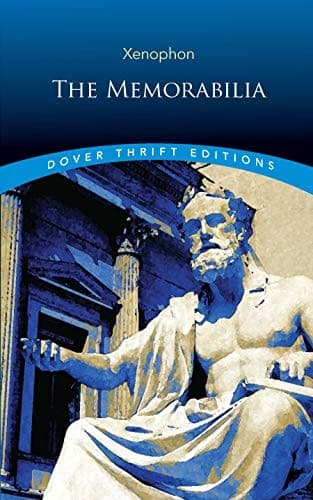
Classical literature; Philosophers, Ancient -- Biography -- Early works to 1800; Socrates -- Trials, litigation, etc. -- Early works to 1800
In the first place, what evidence did they produce that Socrates refused
to recognise the gods acknowledged by the state? Was it that he did not
sacrifice? or that he dispensed with divination? On the contrary, he was
often to be seen engaged in sacrifice, at home or at the common altars
of the state. Nor was his dependence on divination less manifest. Indeed
that saying of his, "A divinity (2) gives me a sign," was on everybody's
lips. So much so that, if I am not mistaken, it lay at the root of
the imputation that he imported novel divinities; though there was no
greater novelty in his case than in that of other believers in oracular
help, who commonly rely on omens of all sorts: the flight or cry
of birds, the utterances of man, chance meetings, (3) or a victim's
entrails. Even according to the popular conception, it is not the mere
fowl, it is not the chance individual one meets, who knows what things
are profitable for a man, but it is the gods who vouchsafe by such
instruments to signify the same. This was also the tenet of Socrates.
Only, whereas men ordinarily speak of being turned aside, or urged
onwards by birds, or other creatures encountered on the path, Socrates
suited his language to his conviction. "The divinity," said he, "gives
me a sign." Further, he would constantly advise his associates to do
this, or beware of doing that, upon the authority of this same divine
voice; and, as a matter of fact, those who listened to his warnings
prospered, whilst he who turned a deaf ear to them repented afterwards.
(4) Yet, it will be readily conceded, he would hardly desire to present
himself to his everyday companions in the character of either knave
or fool. Whereas he would have appeared to be both, supposing (5) the
God-given revelations had but revealed his own proneness to deception.
It is plain he would not have ventured on forecast at all, but for his
belief that the words he spoke would in fact be verified. Then on whom,
or what, was the assurance rooted, if not upon God? And if he had faith
in the gods, how could he fail to recognise them?
(2) Or, "A divine something." See "Encyc. Brit." "Socrates." Dr. H.
Jackason; "The Daemon of Socrates," F. W. H. Myers; K. Joel, "Der
echte und der Xenophontische Sokrates," i. p. 70 foll.; cf.
Aristot. "M. M." 1182 a 10.
(3) See Aesch. "P. V." 487, {enodious te sombolous}, "and pathway
tokens," L. Campbell; Arist. "Birds," 721, {sombolon ornin}:
"Frogs," 196, {to sometukhon exion}; "Eccl." 792; Hor. "Od." iii.
27, 1-7.
(4) See "Anab." III. i. 4; "Symp." iv. 48.
(5) Or, "if his vaunted manifestations from heaven had but manifested
the falsity of his judgment."
Public-domain text, read in full here on John Shaqi.
Reviews
Reviews
No reviews yet
Be the first to share your thoughts on this work.
Join the Discussion
Join the discussion
Sign in to leave a comment or review.
Sign InorCreate an account