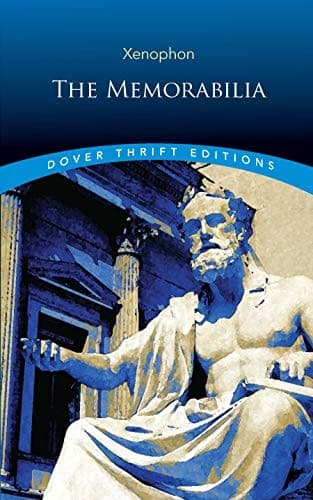
Classical literature; Philosophers, Ancient -- Biography -- Early works to 1800; Socrates -- Trials, litigation, etc. -- Early works to 1800
For himself, without making any such profession, he was content to
believe that those who accepted his views would play their parts as good
and true friends to himself and one another their lives long. Once more
then: how should a man of this character corrupt the young? unless the
careful cultivation of virtue be corruption.
But, says the accuser, (2) by all that's sacred! did not Socrates cause
his associates to despise the established laws when he dwelt on the
folly of appointing state officers by ballot? (3) a principle which, he
said, no one would care to apply in selecting a pilot or a flute-player
or in any similar case, where a mistake would be far less disastrous
than in matters political. Words like these, according to the accuser,
tended to incite the young to contemn the established constitution,
rendering them violent and headstrong. But for myself I think that
those who cultivate wisdom and believe themselves able to instruct
their fellow-citizens as to their interests are least likely to become
partisans of violence. They are too well aware that to violence attach
enmities and dangers, whereas results as good may be obtained by
persuasion safely and amicably. For the victim of violence hates with
vindictiveness as one from whom something precious has been stolen,
while the willing subject of persuasion is ready to kiss the hand which
has done him a service. Hence compulsion is not the method of him
who makes wisdom his study, but of him who wields power untempered
by reflection. Once more: the man who ventures on violence needs the
support of many to fight his battles, while he whose strength lies in
persuasiveness triumphs single-handed, for he is conscious of a cunning
to compel consent unaided. And what has such a one to do with the
spilling of blood? since how ridiculous it were to do men to death
rather than turn to account the trusty service of the living.
(2) {o kategoros} = Polycrates possibly. See M. Schantz, op. cit.,
"Einleitun," S. 6: "Die Anklagerede des Polykrates"; Introduction,
p. xxxii. foll.
(3) i.e. staking the election of a magistrate on the colour of a bean.
See Aristot. "Ath. Pol." viii. 2, and Dr. Sandys ad loc.
But, the accuser answers, the two men (4) who wrought the greatest evils
to the state at any time--to wit, Critias and Alcibiades--were both
companions of Socrates--Critias the oligarch, and Alcibiades the
democrat. Where would you find a more arrant thief, savage, and murderer
(5) than the one? where such a portent of insolence, incontinence,
and high-handedness as the other? For my part, in so far as these two
wrought evil to the state, I have no desire to appear as the apologist
of either. I confine myself to explaining what this intimacy of theirs
with Socrates really was.
(4) See "Hell." I. and II. passim.
Public-domain text, read in full here on John Shaqi.
Reviews
Reviews
No reviews yet
Be the first to share your thoughts on this work.
Join the Discussion
Join the discussion
Sign in to leave a comment or review.
Sign InorCreate an account