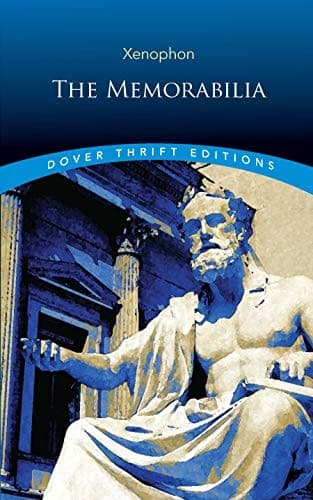
Classical literature; Philosophers, Ancient -- Biography -- Early works to 1800; Socrates -- Trials, litigation, etc. -- Early works to 1800
Then, by all that is sacred (Socrates continued), do not keep us in the
dark, but tell us in what way do you propose first to benefit the state?
what is your starting-point? (8) When Glaucon remained with sealed lips,
as if he were now for the first time debating what this starting-point
should be, Socrates continued: I presume, if you wished to improve a
friend's estate, you would endeavour to do so by adding to its wealth,
would you not? So here, maybe, you will try to add to the wealth of the
state?
(8) Or, "tell us what your starting-point will be in the path of
benefaction."
Most decidedly (he answered).
Soc. And we may take it the state will grow wealthier in proportion as
her revenues increase?
Glauc. That seems probable, at any rate.
Soc. Then would you kindly tell us from what sources the revenues of the
state are at present derived, and what is their present magnitude? No
doubt you have gone carefully into the question, so that if any of these
are failing you may make up the deficit, or if neglected for any reason,
make some new provision. (9)
(9) Or, "or if others have dropped out or been negligently overlooked,
you may replace them."
Glauc. Nay, to speak the truth, these are matters I have not thoroughly
gone into.
Never mind (he said) if you have omitted the point; but you might oblige
us by running through the items or heads of expenditure. Obviously you
propose to remove all those which are superfluous?
Glauc. Well, no. Upon my word I have not had time to look into that side
of the matter either as yet.
Soc. Then we will postpone for the present the problem of making
the state wealthier; obviously without knowing the outgoings and the
incomings it would be impossible to deal with the matter seriously.
But, Socrates (Glaucon remarked), it is possible to enrich the state out
of the pockets of her enemies!
Yes, to be sure, considerably (answered Socrates), in the event of
getting the better of them; but in the event of being worsted, it is
also possible to lose what we have got.
A true observation (he replied).
And therefore (proceeded Socrates), before he makes up his mind with
what enemy to go to war, a statesman should know the relative powers of
his own city and the adversary's, so that, in case the superiority be
on his own side, he may throw the weight of his advice into the scale
of undertaking war; but if the opposite he may plead in favour of
exercising caution.
You are right (he answered).
Soc. Then would you for our benefit enumerate the land and naval forces
first of Athens and then of our opponents?
Glauc. Pardon me. I could not tell you them off-hand at a moment's
notice.
Or (added Socrates), if you have got the figures on paper, you might
produce them. I cannot tell how anxious I am to hear your statement.
Glauc. No, I assure you, I have not got them even on paper yet.
Public-domain text, read in full here on John Shaqi.
Reviews
Reviews
No reviews yet
Be the first to share your thoughts on this work.
Elsewhere in the archive
Join the Discussion
Join the discussion
Sign in to leave a comment or review.
Sign InorCreate an account