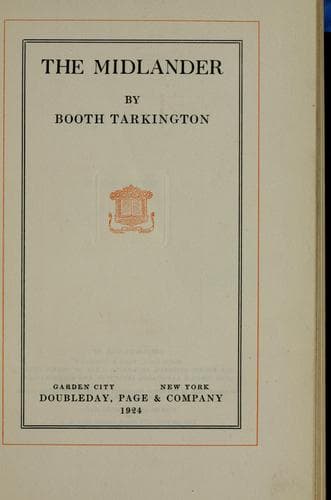
Middle West -- Fiction; Real estate developers -- Fiction; Suburbs -- Fiction
Dan protested again, but Sam shook his head and went on across the lawn,
his hands in his pockets, his head down. The high iron fence, painted
white, culminated in an elaborate gateway, and, when Sam passed out to
the sidewalk there, the iron gateposts rose far above him. Plodding out
between these high white posts, the shabby little figure did not lack
pathos; nor was pathos absent from it as it went doggedly down the
street in the thinning gold of the late afternoon sunshine. Sam looked
back not once; but Dan watched him until he was out of sight, then
returned to the interior of the summer-house, sat down, and stared
broodingly at the littered floor. The floor was not what he saw,
however, for his actual eyes were without vision just then, and it was
his mind’s eye that was busy. It dwelt upon the picture of the exiled
Sam Kohn departing forlornly, and the longer it thus dwelt the warmer
and more threatening grew a painful feeling that seemed to locate itself
in Dan’s upper chest, not far below his collar bone.
This feeling remained there while he dressed; and it was still there
when he sat down at his grandmother’s table for dinner. In fact, it so
increased in poignancy that he could not eat with his customary
heartiness; and his lack of appetite, though he made play with seemingly
busy fork and spoon to cover it, fell under the sharp eye of the lady at
the head of the table. She was a handsome, dominant old woman, with high
colour in her cheeks at seventy-eight, and thick hair, darker than it
was gray, under her lace cap. She sat straight upright in her stiff
chair, for she detested easy-chairs and had never in all her life
lounged in one or sat with her knees crossed; such things were done not
by ladies, but by hoodlums, she said. Her husband, a gentle, submissive
old man, was frail and bent with his years, though they had brought him
great worldly prosperity; and the grandchildren of this couple never
spoke of the house as “Grandpa Savage’s,” but always as “Grandma
Savage’s,” an intuitive discrimination that revealed the rulership. Mrs.
Savage ruled by means of a talent she had for destructive criticism,
which several times prevented her optimistic husband from venturing into
ruin, and had established her as the voice of wisdom.
“Daniel,” she said presently;—“you’re not eating.”
“Yes, I am, grandma.”
“No. Ever since you came to the table, you’ve been sitting there with
your head bent down like that and moving your hands to pretend you’re
eating, but not eating. What’s the matter with you?”
“Nothin’,” he muttered, not lifting his head. “I’m all right.”
“Adelaide,” Mrs. Savage said to his mother;—“has his appetite been
failing lately?”
“Why, no, mamma,” Mrs. Oliphant answered. She was a pretty woman,
quietly cheerful and little given to alarms or anxieties. “Not
seriously,” she added, smiling. “He did very well at lunch, at least.”
Public-domain text, read in full here on John Shaqi.
Reviews
Reviews
No reviews yet
Be the first to share your thoughts on this work.
Join the Discussion
Join the discussion
Sign in to leave a comment or review.
Sign InorCreate an account