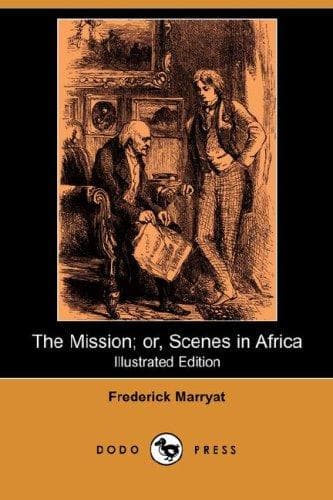
The Mission; or Scenes in AfricaMarryat, Frederick
General
The Mission; or Scenes in Africa
Marryat, Frederick
Adventure stories; Africa -- Fiction
Alexander Wilmot was too much pleased with Mr Swinton not to cultivate
his acquaintance, and they soon became very intimate. The conversation
often turned upon Mr Swinton's favourite study, that of natural
history.
"I confess myself wholly ignorant of the subject," observed Alexander
one day, "though I feel that it must be interesting to those who study
it; indeed, when I have walked through the museums, I have often wished
that I had some one near who could explain to me what I wished to know
and was puzzled about. But it appears to me that the study of natural
history is such an immense undertaking if you comprehend all its
branches. Let me see,--there is botany, mineralogy, and geology--these
are included, are they not?"
"Most certainly," replied Mr Swinton, laughing; "and perhaps the three
most interesting branches. Then you have zoology, or the study of
animals, ornithology for birds, entomology for insects, conchology for
shells, ichthyology for fishes; all very hard names, and enough to
frighten a young beginner. But I can assure you, a knowledge of these
subjects, to an extent sufficient to create interest and afford
continual amusement, is very easily acquired."
"`The proper study of mankind is man,' says the poet,"--observed
Alexander, smiling.
"Poets deal in fiction, Mr Wilmot," replied Mr Swinton; "to study man
is only to study his inconsistencies and his aberrations from the right
path, which the free-will permitted to him induces him to follow; but in
the study of nature, you witness the directing power of the Almighty,
who guides with an unerring hand, and who has so wonderfully apportioned
out to all animals the means of their providing for themselves. Not
only the external, but the inward structure of animals, shows such
variety, and ingenuity to surmount all difficulties, and to afford them
all the enjoyment their nature is capable of, that after every
examination you rise with increased astonishment and admiration at the
condescension and goodness of the Master Hand, thus to calculate and
provide for the necessities of the smallest insect; and you are
compelled to exclaim with the Psalmist, `O God, how manifold are thy
works; in wisdom hast thou made them all!'"
"You certainly do put the study in a new and most pleasurable light,"
replied Alexander.
"The more you search into nature, the more wonderful do you find her
secrets, and, by the aid of chemistry, we are continually making new
discoveries. Observe, Mr Wilmot," said Swinton picking up a straw
which had been blown by the wind on the quarter-deck, "do you consider
that there is any analogy between this straw and the flint in the lock
of that gun?"
"Certainly, I should imagine them as opposite particles of nature as
well might be."
Public-domain text, read in full here on John Shaqi.
Reviews
Reviews
No reviews yet
Be the first to share your thoughts on this work.
Join the Discussion
Join the discussion
Sign in to leave a comment or review.
Sign InorCreate an account