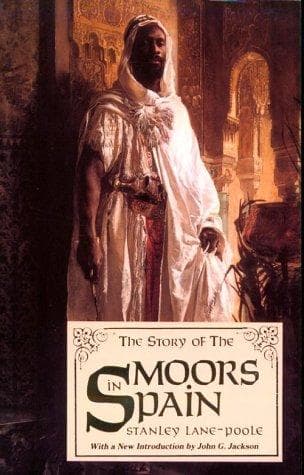
The Mohammedans, or Saracens (a word which means "Easterns"), were
checked in Asia Minor by the forces of the Greek Emperor; and it was not
till the fifteenth century that they at last obtained the long-coveted
possession of Constantinople, by the valour of the Ottoman Turks. So,
too, at the opposite extremity of the Mediterranean, it was an officer
of the Greek Emperor who for a while held the Arab advance in check. The
conquerors swept over the provinces of North Africa, and, after a long
struggle, reduced the turbulent Berber tribes for a while to submission,
till only the fortress of Ceuta held out against them. Like the rest of
the southern shore of the Mediterranean, Ceuta belonged to the Greek
Emperor; but it was so far removed from Constantinople that it was
thrown upon the neighbouring kingdom of Spain for support, and, while
still nominally under the authority of the Emperor, looked really to the
King of Toledo for assistance and protection. It is not likely that all
the aid that Spain could have given would have availed against the
surging tide of Saracen invasion; but, as it happened, there was a
quarrel at that time between Julian the governor of Ceuta and Roderick
the King of Spain, which opened the door to the Arabs.
Spain was then under the rule of the Visigoths, or West Goths, a tribe
of barbarians, like the many others who overran the provinces of the
Roman Empire in its decline. The Ostrogoths had occupied Italy; and
their kinsmen the Visigoths, displacing or subduing the Suevi (or
Swabians) and other rude German tribes, established themselves in the
Roman province of Iberia (Spain) in the fifth century after Christ. They
found the country in the same condition of effeminate luxury and
degeneracy that had proved the ruin of other parts of the empire. Like
many warlike peoples, the Romans, when their work was accomplished and
the world was at their feet, had rested contentedly from their labours,
and abandoned themselves to the pleasures that wealth and security
permit. They were no longer the brave stern men who lived simple lives
and left the ploughshare to wield the sword when a Scipio or a Cæsar
summoned them to defend their country or to conquer a continent. In
Spain the richer classes were given over to luxury and sensuality; they
lived only for eating and drinking, gambling and all kinds of
excitement. The mass of the people were either slaves, or, what was much
the same thing, labourers bound to the soil, who could not be detached
from the land they cultivated but passed with it from master to master.
Between the rich and the slaves was a middle class of burghers, who were
perhaps even worse off: for on their shoulders lay all the burden of
supporting the State; they paid the taxes, performed the civil and
municipal functions, and supplied the money which the rich squandered
upon their luxuries. In a society so demoralized there were no elements
of opposition to a resolute invader. The wealthy nobles were too deeply
Public-domain text, read in full here on John Shaqi.
Reviews
Reviews
No reviews yet
Be the first to share your thoughts on this work.
Join the Discussion
Join the discussion
Sign in to leave a comment or review.
Sign InorCreate an account