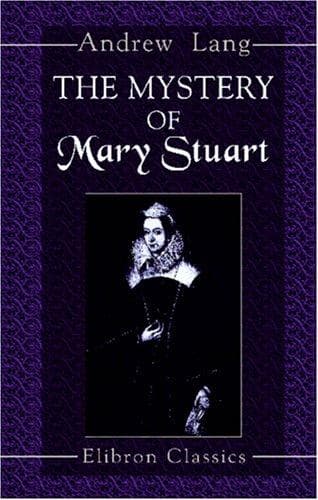
Mary, Queen of Scots, 1542-1587; Queens -- Scotland -- Biography; Scotland -- History -- Mary Stuart, 1542-1567
both their handwritings to testify the same, which I am willed to signify
to you, that you may consider thereof. You know her goodwill towards you,
and how prompt of spirit she is to invent anything that might tend to your
hurt. The rest I remit to your wisdom.... Mr. Secretary’ (Cecil) ‘and Sir
Nicholas’ (Throckmorton) ‘are both direct against your coming here to this
trial.’[264] But it was less unsafe for Lethington to come, and perhaps
try to make his peace with Mary, than to stay in Scotland. Mary also, in
her appeal to all Christian Princes, declares that the handwriting of
several of her accusers proves that they are guilty of the crime they lay
to her charge.[265] It is fairly certain that she had not the murder band,
but something she probably did possess. And Nau says that she had told
Lethington what she knew on June 16, 1567.
If the Casket Letters were now produced, and if Mary were allowed to
defend herself, backed by her own charms of voice and tears, then some, at
least, of her accusers would not be listened to by that assemblage of
Peers and Ambassadors before which she constantly asked leave to plead,
‘in Westminster Hall.’ The Casket Letters, produced by men themselves
guilty, would in these circumstances be slurred as probable forgeries.
Mary would prefer not to come to extremities, but if she did, as Sussex,
one of Elizabeth’s Commissioners, declared, in the opinion of some ‘her
proofs would fall out the better.’
This I take to have been Mary’s attitude towards the Letters, this was her
last line of defence. Indeed the opinion is corroborated by her letter
from Bolton to Lesley (October 5, 1568). She says that Knollys has been
trying _tirer les vers du nez_ (‘to extract her secret plans’), a phrase
used in Casket Letter II. ‘My answer is that I would oppose the truth to
their false charges, _and something which they perchance have not yet
heard_.’[266] Mr. Froude thinks that Mary trusted to a mere theatrical
denial, on the word of a Queen. But I conceive that she had a better
policy; and so thought Sussex.
Much earlier, on June 14, 1568, soon after her flight into England, Mary
had said to Middlemore, ‘If they’ (her accusers) ‘will needs come, desire
my good sister, the Queen, to write that Lethington and Morton (who be
two of the wisest and most able of them to say most against me) may come,
and then let me be there in her presence, face to face, to hear their
accusations, and to be heard how I can make my own purgation, but I think
Lethington would be very loath of that commission.’[267]
Public-domain text, read in full here on John Shaqi.
Reviews
Reviews
No reviews yet
Be the first to share your thoughts on this work.
Elsewhere in the archive
Join the Discussion
Join the discussion
Sign in to leave a comment or review.
Sign InorCreate an account