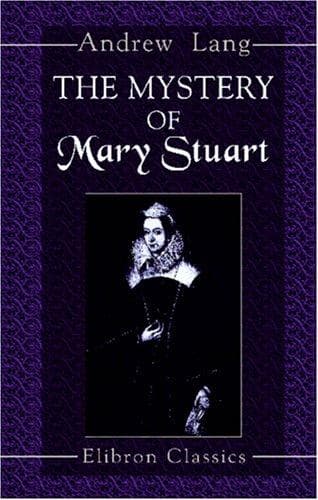
Mary, Queen of Scots, 1542-1587; Queens -- Scotland -- Biography; Scotland -- History -- Mary Stuart, 1542-1567
Till these questions were answered (they were sent on to Elizabeth), Moray
could not ‘enter to the accusation.’[280] Hitherto they had been ‘content
rather to hide and conceal than to publish and manifest to the world’
Mary’s dishonour. They had only told all Europe--in an unofficial way. The
English Commissioners waited for Elizabeth’s reply. On the 11th October,
Moray replied to the charges of Mary, without accusing her of the murder.
He also ‘privately,’ and unofficially, showed to the English Commissioners
some of the Casket Papers. Lethington, Wood (?), Makgill, and Buchanan (in
a new suit of black velvet) displayed and interpreted the documents. They
included a warrant of April 19, signed by Mary, authorising the Lords to
sign the Ainslie band, advising Bothwell to marry her.[281] Of this
warrant we hear nothing, as far as I have observed, at Westminster.[282]
Calderwood, speaking of Morton’s trial in 1581, says that ‘he had,’ for
signing Ainslie’s band, ‘a warrant from the Queen, which none of the rest
had.’[283] At York, the Lords said that all of them had this warrant.
‘Before they had this warrant, there was none of them that did, or would,
set to their hands, saving only the Earl of Huntly.’ Yet they also alleged
that they signed ‘more for fear than any liking they had of the same.’
They alleged that they were coerced by 200 musketeers.[284] Now Kirkcaldy,
on April 20, 1567, reports the signing of the Band on the previous day, to
Bedford, but says not a word of the harquebus men. They are not mentioned
till ten days later.
Lethington kindly explained the reason for Mary’s abduction, which
certainly needs explanation. A pardon for that, he told the English Lords,
would be ‘sufficient also for the murder.’ The same story is given in the
‘Book of Articles,’ the formal impeachment of Mary.[285] Presently the
English Commissioners were shown ‘one horrible and long letter of her own
hand, containing foul matter and abominable ... with divers fond ballads
of her own hand, which letters, ballads, and other writings before
specified, were closed in a little coffer of silver and gilt, heretofore
given by her to Bothwell.’
After expressing abhorrence, the three Commissioners enclose extracts,
partly in Scots.[286] The Commissioners, after seeing the papers
unofficially, go on to ask how they are to proceed. Their letter has been
a good deal modified, by the authors, in a rather less positive and more
sceptical sense than the original, which has been deciphered.[287]
Public-domain text, read in full here on John Shaqi.
Reviews
Reviews
No reviews yet
Be the first to share your thoughts on this work.
Elsewhere in the archive
Join the Discussion
Join the discussion
Sign in to leave a comment or review.
Sign InorCreate an account