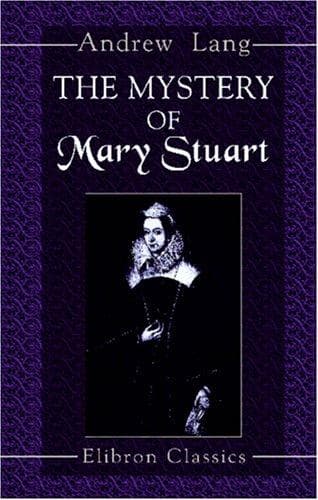
Mary, Queen of Scots, 1542-1587; Queens -- Scotland -- Biography; Scotland -- History -- Mary Stuart, 1542-1567
On the same day, Norfolk wrote separately to Pembroke, Leicester, and
Cecil. He excused the delays of the Scots: ‘they stand for their lives,
lands, goods, and they are not ignorant, if they would, for it is every
day told them, that, as long as they abstain from touching their Queen’s
honour, she will make with them what reasonable end they can devise....’
In fact, as Melville has told us, he himself was their go-between for the
compromise. Norfolk adds that there are two ways, by justice public and
condign, ‘if the fact shall be thought as detestable and manifest to you,
as, for aught we can perceive, it seemeth here to us,’ or, if Elizabeth
prefer it, ‘to make such composition as in so broken a cause may be.’
Norfolk seems in exactly the mind of an honourable man, horrified by
Mary’s guilt, and anxious for her punishment. He either dissembled, or was
a mere weathercock of sentiment, or, presently, he found reason to doubt
the authenticity of what he had been shown. Lethington, we saw, showed the
letters, unofficially, on October 11. On October 12, Knollys had a talk
with Mary. ‘When,’ asked she, ‘will they proceed to their odious
accusations, or will they stay and be reconciled to me, or what will my
good sister do for me?’ Surely an innocent lady would have said, ‘Let them
do their worst: I shall answer them. A reconciliation with dastardly
rebels I refuse.’ That was not Mary’s posture: ‘But,’ she said, ‘if they
will fall to extremities they shall be answered roundly, and at the full,
and then are we past all reconciliations.’ So wrote Knollys to Norfolk, on
October 14.[288] Mary would fall back on her ‘something in black and
white.’
On October 13, Lesley and Boyd rode to Bolton, says Knollys, and told Mary
what Lethington had done: his privy disclosure of her Letters. He himself
was doubtless their informant, his plan being to coerce her into a
compromise.
Of all things, it now seemed most unlikely that Norfolk would veer round
to Mary’s side, and desire to marry her. But this instantly occurred, and
the question is, had he seen reason to doubt the authenticity of the
letter which so horrified him? Had Lethington told him something on that
long ride which they took together, on Saturday, October 16?[289] As shall
be shown, in our chapter on the Possible Forgers, this may be what
Lethington had done, and over-done. He had shaken Norfolk’s belief in the
Letter, so much that Norfolk presently forbade Mary to accept a
compromise!
The evidence of Lesley is here, as usual, at cross purposes. In his
confession (November 6, 1571) he says that Robert Melville took him to
Lethington’s lodgings, _after_ Lethington had secretly shown the Letters.
‘We talked almost a whole night.’ Lethington said that Norfolk favoured
Mary, and wished Moray to drop the charges and arrange a compromise.
Public-domain text, read in full here on John Shaqi.
Reviews
Reviews
No reviews yet
Be the first to share your thoughts on this work.
Elsewhere in the archive
Join the Discussion
Join the discussion
Sign in to leave a comment or review.
Sign InorCreate an account