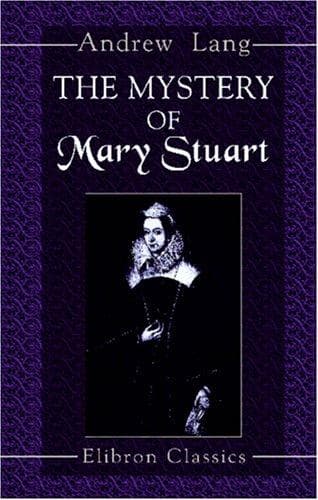
Mary, Queen of Scots, 1542-1587; Queens -- Scotland -- Biography; Scotland -- History -- Mary Stuart, 1542-1567
Infinitely the most fascinating character in the plot was William
Maitland, the younger, of Lethington. The charm which he exercised over
his contemporaries, from Mary herself to diplomatists like Randolph, and
men of the sword like Kirkcaldy of Grange, has not yet exhausted itself.
Readers of Sir John Skelton’s interesting book, ‘Maitland of Lethington,’
must observe, if they know the facts, that, in presence of Lethington, Sir
John is like ‘birds whom the charmer serpent draws.’ He is an advocate of
Mary, but of Mary as a ‘charming sinner.’ By Lethington he is dominated:
he will scarcely admit that there is a stain on his scutcheon, a
scutcheon, alas! smirched and defaced. Could a man of to-day hold an
hour’s converse with a man of that age, he would choose Lethington. He was
behind all the scenes: he held the threads of all the plots; he made all
the puppets dance at his will. Yet by birth he was merely the son of the
good and wise poet and essayist, Sir Richard Lethington, laird of a rugged
tower and of lands in Lauderdale, _pastorum loca vasta_. He was born about
1525, had studied in France, and was a man of classical culture, without a
touch of pedantry. As early as 1555, we find him arguing after supper with
Knox, on the lawfulness of bowing down in the House of Rimmon, attending
the Mass. Knox had the last word, for Lethington was usually tactful; in
argument Knox was a babe in the hands of the amateur theologian. Appointed
Secretary to Mary of Guise, in the troubled years of the Congregation,
Lethington deserted her and joined the Lords. He negotiated for them with
Cecil and Elizabeth, and almost to the last he was true to one idea, the
union of the crowns of England and Scotland in peace and amity.
Through all the windings of his policy that idea governed him if not
thwarted by personal considerations, as at the last. Before Mary’s arrival
in Scotland he hastened to make his peace with her, and her peace and
trust she readily granted. Lethington was the spoiled child of the
political world, ‘the flower of the wits of Scotland,’ as Elizabeth styled
him; was reckoned indispensable, was petted, caressed, and forgiven. He
not only withstood Knox, in the interests of religious toleration, but he
met him with a smile, with the weapons of _persiflage_, which riddled and
rankled in the vanity of the Reformer. Lethington was modern to the
finger-tips, a man of to-day, moving among the bravos, and using the
poisoned tools, of an age of violence and perfidy.
Allied by marriage to the Earl of Atholl, in hours of peril he placed the
Tay and the Pass of Killiecrankie between himself and the Law.
Public-domain text, read in full here on John Shaqi.
Reviews
Reviews
No reviews yet
Be the first to share your thoughts on this work.
Join the Discussion
Join the discussion
Sign in to leave a comment or review.
Sign InorCreate an account