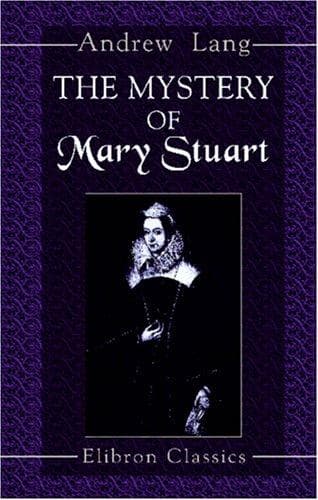
Mary, Queen of Scots, 1542-1587; Queens -- Scotland -- Biography; Scotland -- History -- Mary Stuart, 1542-1567
But alas for Knox’s hopes! Only three days after the sermon, on March 29,
Arran (who had been wont to confide his love-sorrows to Knox) came to the
Reformer with a strange tale. Bothwell had opened to him, in the effusions
of their new friendship, his design to seize Mary, and put her in Arran’s
keeping, in Dumbarton Castle. He would slay Mar (that is Lord James
Stuart, later Moray) and Lethington, whom he detested, ‘and he and I would
rule all,’ said Arran, who knew very well what sort of share he would be
permitted to enjoy in the dual control. I have very little doubt that the
impoverished, more or less disgraced Bothwell did make this proposal. He
was safe in doing so. If Arran accused him, Arran would, first, be
incarcerated, till he proved his charge (which he could not do), or,
secondly, Bothwell would appeal to Trial by Combat, for which he knew
that Arran had no taste. In his opinion, Bothwell merely meant to entrap
him, and his idea was to write to Mary and her brother. Whether Knox
already perceived that Arran was insane, or not, he gave him what was
perhaps the best advice--to be silent. Arran’s position was perilous. If
the plot came to be known, if Bothwell confessed all, then he would be
guilty of concealing his foreknowledge of it; like Morton in the case of
Darnley’s murder.
Arran did not listen to Knox’s counsel. He wrote to Mary and Mar, partly
implicating his own father; he then fled from his father’s castle of
Keneil, hurried to Fife, and was brought by Mar (Moray) to Mary at
Falkland, whither Bothwell also came, perhaps warned by Knox, who had a
family feudal attachment to the Hepburns. Arran now was, or affected to
be, distraught. He persisted, however, in his charge against Bothwell, who
was warded in Edinburgh Castle, while Arran’s father was deprived of
Dumbarton Castle.
The truth of Arran’s charge is uncertain. In any case, ‘the Queen both
honestly and stoutly behaves herself,’ Randolph wrote. While Bothwell lay,
a prisoner on suspicion, in Edinburgh Castle, Mary was come to a crisis in
her reign. Her political position, hitherto, may be stated in broad
outline. The strains of European tendencies, political and theological,
were dragging Scotland in opposite directions. Was the country to remain
Protestant, and in alliance with England, or was it to return to the
ancient league with France, and to the Church of Rome?
Public-domain text, read in full here on John Shaqi.
Reviews
Reviews
No reviews yet
Be the first to share your thoughts on this work.
Join the Discussion
Join the discussion
Sign in to leave a comment or review.
Sign InorCreate an account