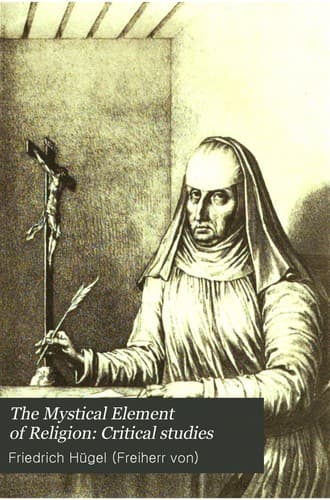
The Mystical Element of Religion, as studied in Saint Catherine of Genoa and her friends, Volume 2 (of 2)Hügel, Friedrich, Freiherr von
Religion
The Mystical Element of Religion, as studied in Saint Catherine of Genoa and her friends, Volume 2 (of 2)
Hügel, Friedrich, Freiherr von
Catherine, of Genoa, Saint, 1447-1510
(3) And the difficulties and motives special to those who supplant
the Intrinsic, Ameliorating Purgatory by an Extrinsic, Vindicative
_Satisfactorium_, can indeed be met by those who would preserve that
beautifully dynamic, ethical, and spiritual conception. For we can
hold that the fundamental condition,--the particular determination
of the active will,--remains quite unchanged, from Death to Heaven,
in these souls; that this determination of the active will requires
more or less of time and suffering fully to permeate and assimilate to
itself all the semi-voluntary wishes and habits of the soul; and that
this permeation takes place among conditions in which the soul’s acts
are too little resisted and too certain of success to be constituted
meritorious. We can take Catherine’s beautiful Plunge-conception as
indicating the kind of operation effected in and by the soul, at and
through the momentary vision of God. And we can feel convinced that
it is ever, in the long run, profoundly dangerous to try to clarify
and simplify doctrines beyond or against the scope and direction of
the analogies of Nature and of Grace, which are ever so dynamic and
organic in type: for the poor and simple, as truly as the rich and
learned, ever require, not to be merely taken and left as they are, but
to be raised and trained to the most adequate conceptions possible to
each.--It is, in any case, very certain that the marked and widespread
movement of return to belief in a Middle State is distinctly towards a
truly Purgative Purgatory, although few of these sincere truth-seekers
are aware, as is Dr. Anrich, that they are groping after a doctrine
all but quite explained away by a large body of late Scholastic and
Neo-Scholastic theologians.[274]
(4) Yet it is very satisfactory to note how numerous, and especially
how important are, after all is said, the theologians who have
continued to walk, in this matter, in the footsteps of the great
Alexandrines. St. Gregory of Nyssa teaches a healing of the soul in the
beyond and a purification by fire.[275] St. Augustine says that “fire
burns up the work of him who thinketh of the things of this world,
since possessions, that are loved, do not perish without pain on the
part of their possessor. It is not incredible that something of this
sort takes place after this life.”[276]
Public-domain text, read in full here on John Shaqi.
Reviews
Reviews
No reviews yet
Be the first to share your thoughts on this work.
Elsewhere in the archive
Join the Discussion
Join the discussion
Sign in to leave a comment or review.
Sign InorCreate an account