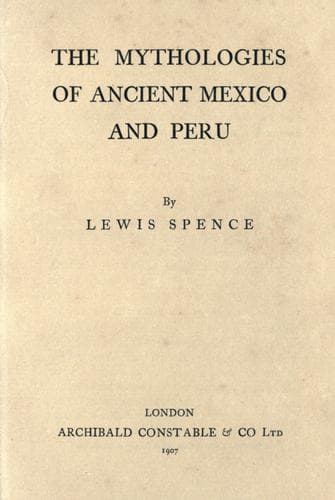
The Mythologies of Ancient Mexico and PeruSpence, Lewis
History
The Mythologies of Ancient Mexico and Peru
Spence, Lewis
Indian mythology -- Mexico; Indian mythology -- Peru
The civilisation of the Ancient Peruvians, although in many ways
analogous to that of the Aztecs, was strangely dissimilar in some of its
aspects. The peoples of the two empires were totally unaware of each
other's existence, and were divided by dense tracts of mountain, plain,
and forest, where the most intense savagery prevailed. It seems probable
that the Peruvian culture had its origin in the region of Lake Titicaca,
and that it was of an indigenous character admits of little doubt. Like
the Mexicans, the Peruvians had displaced an older civilisation and an
older race. What was the nature of that civilisation, and thanks to what
people it flourished, it is at present impossible to say. Scattered over
the surface of the Peruvian slope are Cyclopean ruins, the sole remnants
of the works of a more primeval people. These ruins are chiefly to be
found in the neighbourhood of Lake Titicaca and Cuzco, the ancient
metropolis of the Incas. Whatever may have been the architectural
ability of this ancient people, the usurpers had little to learn from
them in this respect, or, more strictly speaking, having borrowed their
methods, continued faithful to them. The temples and mansions of the
Peruvians were massive and handsome, but for the most part covered only
with a thatch of Indian maize straw. They made long, straight,
macadamised roads which they pushed with surprising engineering skill
through tunnelled mountains, spanning seemingly impassable gorges with
marvellously constructed bridges. The temples and the palaces of the
Incas were adorned with gold and silver ornaments of fabulous value and
skilful design. Sumptuous baths, supplied with hot and cold water by
means of pipes laid in the earth, were to be found in the houses of the
aristocracy, and a high state of comfort and luxury prevailed.
To describe the social polity of the Peruvians is to describe their
religion, for the two were one and the same. The empire of Peru was the
most absolute theocracy the world has ever seen, much more absolute, for
example, than that of Israel under the Judges. The Inca was the direct
representative of the sun upon earth. He was the head, the very
keystone of a socio-religious edifice to equal which in intricacy of
design and organisation the entire history of man has no parallel to
offer.
Public-domain text, read in full here on John Shaqi.
Reviews
Reviews
No reviews yet
Be the first to share your thoughts on this work.
Join the Discussion
Join the discussion
Sign in to leave a comment or review.
Sign InorCreate an account