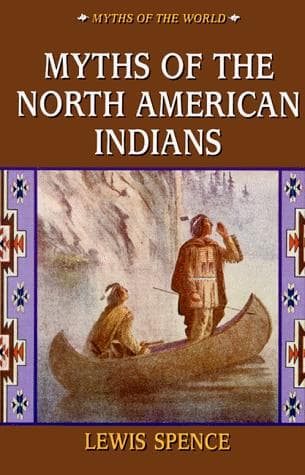
The Myths of the North American IndiansSpence, Lewis
History
The Myths of the North American Indians
Spence, Lewis
Indian mythology -- North America; Indians of North America -- Folklore
Now the Onondagas were a formidable tribe, fierce
and warlike, and the Caniengas, being long accustomed
to war, were not the most peaceable of nations, and
ere long there was trouble between them, while both
were at war with the Hurons. At the head of the
Onondagas was the great chief Atotarho, whose
sanguinary exploits and crafty stratagems had become
the dread of the neighbouring peoples, and among his
warriors was the generous Hiawatha. Hiawatha was filled
with horror at the sight of the suffering caused by
Atotarho's expeditions, and already his statesman's
mind was forming projects of peace. He saw that in
confederation lay the means not only of preserving
peace among his people, but of withstanding alien
foes as well. In two consecutive years he called an
assembly to consider his plan, but on each occasion the
grim presence of Atotarho made discussion impossible.
Hiawatha in despair fled from the land of the
Onondagas, journeyed eastward through the country
of the Oneidas, and at last took up his residence
{226}
among the Mohawks, into which tribe he was adopted.
It has been said by some authorities, and the idea does
not lack probability, that Hiawatha was originally
a Mohawk, and that he spent some time among the
Onondagas, afterward returning to his own people.
At all events, the Mohawks proved more amenable to
reason than the Onondagas had done. Among the
chiefs of his adopted tribe Hiawatha found
one--Dekanewidah--who fell in with his confederation
plans, and agreed to work along with him. Messengers
were dispatched to the Oneidas, who bade them
return in a year, at the end of which period negotiations
were renewed. The result was that the Oneida
chiefs signed a treaty inaugurating the Kayanerenh
Kowa. An embassy to the Onondagas was fruitless,
as Atotarho persistently obstructed the new scheme;
but later, when the Kayanerenh Kowa embraced the
Cayugas, messages were once more sent to the powerful
Onondagas, diplomatically suggesting that Atotarho
should take the lead in the Grand Council. The grim
warrior was mollified by this sop to his vanity, and
condescended to accept the proposal. Not only that,
but he soon became an enthusiastic worker in the
cause of confederation, and secured the inclusion of the
Senecas in the League.
The confederacy of the Five Nations was now complete,
and the 'Silver Chain,' as their Grand Council
was called, met together on the shores of the Salt
Lake. The number of chiefs chosen from each tribe
bore some relation to its numerical status, the largest
number, fourteen, being supplied by the Onondagas.
The office of representative in the Council was to be an
hereditary one, descending in the female line, as with
the Picts of Scotland and other primitive peoples, and
never from father to son.
{227}
Public-domain text, read in full here on John Shaqi.
Reviews
Reviews
No reviews yet
Be the first to share your thoughts on this work.
Elsewhere in the archive
Join the Discussion
Join the discussion
Sign in to leave a comment or review.
Sign InorCreate an account