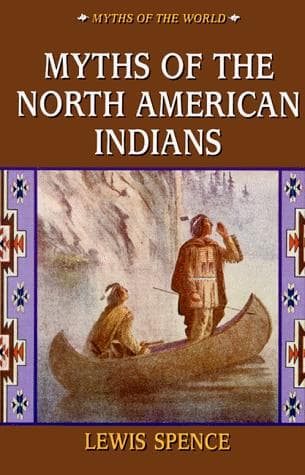
The Myths of the North American IndiansSpence, Lewis
History
The Myths of the North American Indians
Spence, Lewis
Indian mythology -- North America; Indians of North America -- Folklore
It cannot be said that the religious sense was exceptionally strong in
the mind of the North American Indian. But this was due principally to
the stage of culture at which he stood, and in some cases still stands.
In man in his savage or barbarian condition the sense of reverence as
we conceive it is small, and its place is largely filled by fear and
superstition. It is only at a later stage, when civilizing influences
have to some extent banished the grosser terrors of animism and
fetishism, that the gods reveal themselves in a more spiritual aspect.
{141}
CHAPTER III: ALGONQUIAN MYTHS AND LEGENDS
Glooskap and Malsum
The Algonquin Indians have perhaps a more extensive mythology than the
majority of Indian peoples, and as they have been known to civilization
for several centuries their myths have the advantage of having been
thoroughly examined.
One of the most interesting figures in their pantheon is Glooskap,
which means 'The Liar'; but so far from an affront being intended to
the deity by this appellation, it was bestowed as a compliment to his
craftiness, cunning being regarded as one of the virtues by all savage
peoples.
Glooskap and his brother Malsum, the Wolf, were twins, and from this we
may infer that they were the opposites of a dualistic system, Glooskap
standing for what seems 'good' to the savage, and Malsum for all that
was 'bad.'[1] Their mother died at their birth, and out of her body
Glooskap formed the sun and moon, animals, fishes, and the human race,
while the malicious Malsum made mountains, valleys, serpents, and every
manner of thing which he considered would inconvenience the race of men.
[1] This 'goodness' and 'badness,' however, is purely relative and of
modern origin, such deities, as already explained, being figures in a
light-and-darkness myth.
Each of the brothers possessed a secret as to what would kill him, as
do many other beings in myth and fairy story, notably Liew Llaw Gyffes
in Welsh romance.
Malsum asked Glooskap in what manner he could be killed, and the elder
brother, to try his sincerity, replied that the only way in which his
life could be taken was by the touch of an owl's feather--or, as {142}
some variants of the myth say, by that of a flowering rush. Malsum in
his turn confided to Glooskap that he could only perish by a blow from
a fern-root. The malicious Wolf, taking his bow, brought down an owl,
and while Glooskap slept struck him with a feather plucked from its
wing. Glooskap immediately expired, but to Malsum's chagrin came to
life again. This tale is surprisingly reminiscent of the Scandinavian
myth of Balder, who would only die if struck by a sprig of mistletoe by
his brother Hodur. Like Balder, Glooskap is a sun-god, as is well
proved by the circumstance that when he dies he does not fail to revive.
Public-domain text, read in full here on John Shaqi.
Reviews
Reviews
No reviews yet
Be the first to share your thoughts on this work.
Elsewhere in the archive
Join the Discussion
Join the discussion
Sign in to leave a comment or review.
Sign InorCreate an account