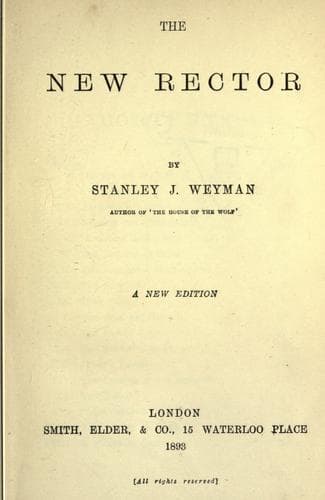
Clergy -- England -- Fiction; England -- Social life and customs -- 19th century -- Fiction
Mr. Peat, the manager, shrugged his shoulders, and glanced at his
companions rather in sorrow than surprise. Lindo, standing behind the
doctor, saw the look. Till then he had stood silent. Now he pressed
forward. “Did I hear you say that one of the injured men died after he
was found?” he asked.
“Yes, that is so,” the manager answered, looking keenly at him, and
wondering who he was.
“The others that are hurt—are their lives in danger?”
“I am afraid so,” the man replied.
“Then I have a right to be with them,” the rector answered quickly. “I
am a clergyman, and I have hastened here, fearing this might be the
case. But I have also attended an ambulance class, and I can dress a
burn. Besides, I am a younger man than our friend here, and, if you
will let me down, I will go.”
“By George, sir!” exclaimed the manager, looking round for approval and
smiting his thigh heavily, “you are a man as well as a parson, and down
you shall go, and thank you! You may make the men more comfortable, and
any way you will put heart into them, for you have some to spare
yourself. As for danger, there is none!—Jack!”—this in a louder voice
to some one in the background—“just twitch that rope! And get that tub
up, will you? Look slippery now.”
Lindo felt a hand on his arm and, obeying the silent gesture of the
nearest gaunt figure, stepped aside. In a twinkling the man stripped
off the parson’s long coat and put on him the pilot jacket from his own
shoulders; a second man gave Lindo a peaked cap of stiff leather in
place of his soft hat and a third fastened a pit lamp round his neck,
explaining to him how to raise the wick without unlocking the lamp, and
also showing him that, if it hung too much on one side or were upset,
its flame would expire of itself. And upon one thing Lindo was never
tired of dwelling afterward—the kindly tact of these rough men, and how
by seemingly casual words, and even touches, the roughest sought to
encourage him, while ignoring the possibility of his feeling alarm.
Meanwhile Mr. Keogh, standing in a state of considerable perplexity and
discomfiture where the rector had left him, heard a well-known voice at
his elbow, and turned to find that Gregg had arrived. The younger
doctor was not the man to be awed into silence, and, as he came up, was
speaking loudly. “Hallo, Mr. Keogh!” he said. “Heard you were before
me. Have you got them all in hand? Cuts or burns mostly, eh?”
“They are not above ground yet,” Mr. Keogh answered. He and Gregg were
not on speaking terms, but such an emergency as this was allowed to
override their estrangement.
“Oh, then we shall have to wait,” Gregg answered, looking round on the
scene with a mixture of curiosity and professional _aplomb_. “I wish I
had spared my horse. Any other medical man here?”
“No; and they want one of us to go down in the bucket,” Keogh
explained. “There are some injured men at the foot of the shaft. I have
a wife and children, and I thought that perhaps you——”
Public-domain text, read in full here on John Shaqi.
Reviews
Reviews
No reviews yet
Be the first to share your thoughts on this work.
Elsewhere in the archive
Join the Discussion
Join the discussion
Sign in to leave a comment or review.
Sign InorCreate an account