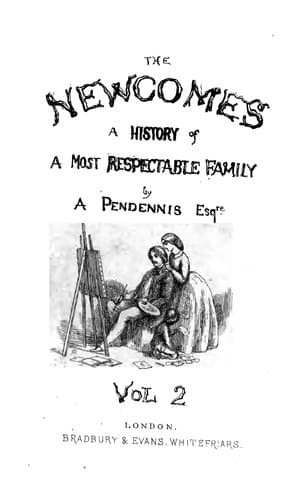
The Newcomes: Memoirs of a Most Respectable FamilyThackeray, William Makepeace
General
The Newcomes: Memoirs of a Most Respectable Family
Thackeray, William Makepeace
Domestic fiction; Families -- England -- Fiction
frolics. A young nobleman, full of life and spirits, generous of his
money, jovial in his humour, ready with his sword, frank, handsome,
prodigal, courageous, always finds favour. Young Scapegrace rides a
steeplechase or beats a bargeman, and the crowd applauds him. Sages and
seniors shake their heads, and look at him not unkindly; even stern old
female moralists are disarmed at the sight of youth and gallantry, and
beauty. I know very well that Charles Surface is a sad dog, and Tom
Jones no better than he should be; but, in spite of such critics as Dr.
Johnson and Colonel Newcome, most of us have a sneaking regard for
honest Tom, and hope Sophia will be happy, and Tom will end well at
last.
Five-and-twenty years ago the young Earl of Kew came upon the town,
which speedily rang with the feats of his lordship. He began life time
enough to enjoy certain pleasures from which our young aristocracy of
the present day seem, alas! to be cut off. So much more peaceable and
polished do we grow, so much does the spirit of the age appear to
equalise all ranks; so strongly has the good sense of society, to which
in the end gentlemen of the very highest fashion must bow, put its veto
upon practices and amusements with which our fathers were familiar. At
that time the Sunday newspapers contained many and many exciting
reports of boxing-matches. Bruising was considered a fine manly old
English custom. Boys at public schools fondly perused histories of the
noble science, from the redoubtable days of Broughton and Slack, to the
heroic times of Dutch Sam and the Game Chicken. Young gentlemen went
eagerly to Moulsey to see the Slasher punch the Pet’s head, or the
Negro beat the Jew’s nose to a jelly. The island rang as yet with the
tooting horns and rattling teams of mail-coaches; a gay sight was the
road in merry England in those days, before steam-engines arose and
flung its hostelry and chivalry over. To travel in coaches, to drive
coaches, to know coachmen and guards, to be familiar with inns along
the road, to laugh with the jolly hostess in the bar, to chuck the
pretty chambermaid under the chin, were the delight of men who were
young not very long ago. Who ever thought of writing to the Times then?
“Biffin,” I warrant, did not grudge his money, and “A Thirsty Soul”
paid cheerfully for his drink. The road was an institution, the ring
was an institution. Men rallied round them; and, not without a kind
conservatism, expatiated upon the benefits with which they endowed the
country, and the evils which would occur when they should be no
more:—decay of English spirit, decay of manly pluck, ruin of the breed
of horses, and so forth, and so forth. To give and take a black eye was
not unusual nor derogatory in a gentleman; to drive a stage-coach the
enjoyment, the emulation of generous youth. Is there any young fellow
of the present time who aspires to take the place of a stoker? You see
occasionally in Hyde Park one dismal old drag with a lonely driver.
Public-domain text, read in full here on John Shaqi.
Reviews
Reviews
No reviews yet
Be the first to share your thoughts on this work.
Elsewhere in the archive
Join the Discussion
Join the discussion
Sign in to leave a comment or review.
Sign InorCreate an account