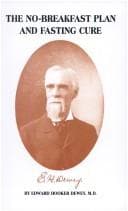
The No Breakfast Plan and the Fasting-CureDewey, Edward Hooker
Science
The No Breakfast Plan and the Fasting-Cure
Dewey, Edward Hooker
Fasting; Nutrition
As a daily ration without change, this combination, strictly adhered to,
would prostrate the energies of a giant, and he would find himself
mustered out of all active service in less time than the hapless sick
are often compelled to endure such feeding. Does Nature so conveniently
reverse herself to meet an emergency that the sick can be built up and
sustained by such feeding as would debilitate the well?
In the city where I live the physicians average well in learning,
ability, character, and experience. Among them are the extremists in
dosage: those with a hundred remedies for a hundred symptoms; others
with such boluses as would writhe the face of an ox. There are some with
extraordinary force of command in the rooms of the sick, who believe
that whiskey is nourishing and that milk is liquid food; that doses go
into human stomachs to travel the rounds of the circulation, and finally
drop off at the right place for either patchwork or original work.
Whatever there is in drugs to cure disease, whatever in milk and the
strongest alcoholics to sustain the strength, every protracted case has
been made to reveal in their forceful hands. I have no reason to believe
they exceeded authorized treatments. I have no reason to doubt that in
all countries, in all lands, where there are educated physicians, the
same appliances are in common use, appliances that will make the next
short step from the lancet and bolus of a darker age the estimate of the
time to come.
The treatments of the sick are always changing, while the process of
cure remains the same. Only in the case of broken bones are we compelled
to let Nature do all the curing, while we may take pride in some
progress in the mechanical appliances.
As milk and stimulants are a common, authorized means to sustain the
sick, and as they are poured into human stomachs with all the faith with
which lancets were once forced into congested veins, their efficiency
for good or evil must be studied by comparison.
Treatments must lessen both the severity and the duration of disease to
be of permanent benefit. For a study by comparison, this opportunity
came to me. There was a call to attend a case of typhoid fever in a
young girl. In the same vicinity there had been under the care of one of
my forceful brethren a woman in middle life, whose stomach was
habitually rejecting all the milk and alcoholics poured into it, the
doctor having a theory that good would result no matter how brief the
time they were retained.
Public-domain text, read in full here on John Shaqi.
Reviews
Reviews
No reviews yet
Be the first to share your thoughts on this work.
Join the Discussion
Join the discussion
Sign in to leave a comment or review.
Sign InorCreate an account