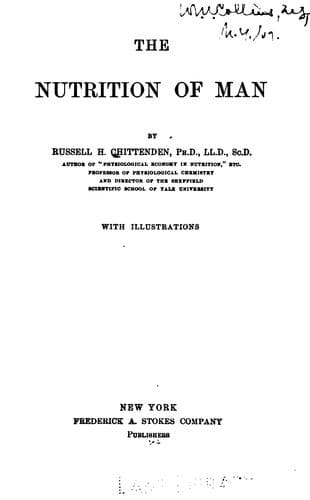
The nutrition of manChittenden, R. H. (Russell Henry)
Science
The nutrition of man
Chittenden, R. H. (Russell Henry)
Nutrition
The illustrations so far presented, with the general agreement in the
character of the results, might perhaps be interpreted as indicating
that there is no difficulty whatever in bringing a high proteid
consumer, like a dog, down to a low level of proteid consumption.
This, however, would be a false impression. Much depends upon the
character of the proteid food, at least where any attempt at rapid
change is made, for a certain modicum of meat or other animal food
seems a necessary part of the daily diet if health and strength are
to be maintained. A dog transferred suddenly from a daily ration in
which meat and milk are conspicuous elements to a diet in which these
are wholly wanting is very liable to show disturbing symptoms almost
immediately. One case may be cited in illustration of these statements.
On September 29, 1905, dog No. 17, weighing 18.2 kilos, was placed on
a daily diet composed of 70 grams of fresh meat, 442 grams of milk,
300 grams of bread, and 28 grams of lard. This ration contained 9.06
grams of nitrogen and had a fuel value of 1465 calories, or 0.5 gram
of nitrogen and 80 calories per kilogram of body-weight. On October
11, the animal weighed 18.6 kilograms and was in perfect condition. On
the 13th, the meat was reduced to 34 grams per day, but the milk was
increased in amount so as to maintain the same nitrogen intake and fuel
value as before. This diet was continued until November 3, a balance
experiment covering ten days from October 22 to the 31 inclusive,
showing that the animal was laying by a little nitrogen. On November
3, the diet was changed to milk, bread, and lard, the fuel value being
maintained at 80 calories per kilo daily, while the nitrogen intake
was reduced to 0.30 gram per kilo. On this diet, the animal seemed to
thrive perfectly, and at the end of two weeks showed a body-weight of
18.2 kilograms. November 19, the milk was withdrawn, the bread being
increased so as to keep the daily nitrogen intake and the fuel value
unchanged. The day’s food was now composed of bread and lard solely,
but, as just stated, the nitrogen and fuel values were unaltered. In
four days’ time, however, a change began to creep over the animal; the
appetite diminished, and there was apparent a condition of lassitude
and general weakness which deterred the animal from moving about as
usual.
Public-domain text, read in full here on John Shaqi.
Reviews
Reviews
No reviews yet
Be the first to share your thoughts on this work.
Elsewhere in the archive
Join the Discussion
Join the discussion
Sign in to leave a comment or review.
Sign InorCreate an account