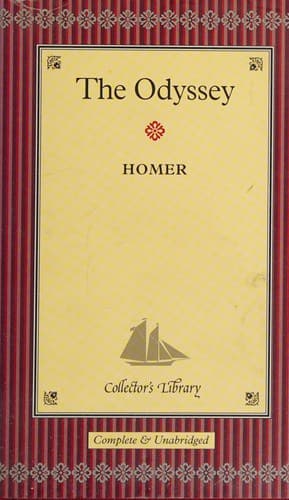
Epic poetry, Greek -- Translations into English; Homer -- Translations into English; Odysseus, King of Ithaca (Mythological character) -- Poetry
publication (to use a modern phrase not altogether suitable, yet the
nearest approaching to the sense). It argued a new way of looking at
the old epical treasures of the people, as well as a thirst for new
poetical effect; and the men who stood forward in it may well be
considered as desirous to study, and competent to criticize, from their
own individual point of view, the written words of the Homeric
rhapsodies, just as we are told that Kallinus both noticed and
eulogized the Thebais as the production of Homer. There seems,
therefore, ground for conjecturing that (for the use of this
newly-formed and important, but very narrow class), manuscripts of the
Homeric poems and other old epics,—the Thebais and the Cypria, as well
as the Iliad and the Odyssey,—began to be compiled towards the middle
of the seventh century B.C.; and the opening of Egypt to Grecian
commerce, which took place about the same period, would furnish
increased facilities for obtaining the requisite papyrus to write upon.
A reading class, when once formed, would doubtless slowly increase, and
the number of manuscripts along with it: so that before the time of
Solon, fifty years afterwards, both readers and manuscripts, though
still comparatively few, might have attained a certain recognized
authority, and formed a tribunal of reference against the carelessness
of individual rhapsodies.”
But even Peisistratus has not been suffered to remain in possession of
the credit, and we cannot help feeling the force of the following
observations:—
Public-domain text, read in full here on John Shaqi.
Reviews
Reviews
No reviews yet
Be the first to share your thoughts on this work.
Join the Discussion
Join the discussion
Sign in to leave a comment or review.
Sign InorCreate an account