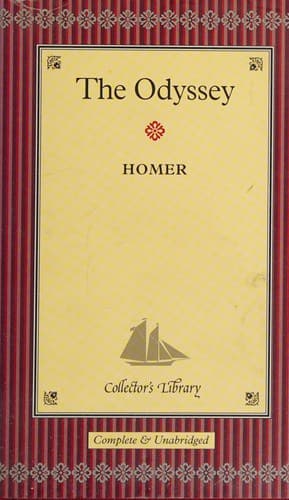
Epic poetry, Greek -- Translations into English; Homer -- Translations into English; Odysseus, King of Ithaca (Mythological character) -- Poetry
The prudent youth replied: “O thou the grace
And lasting glory of the Grecian race!
Just was the vengeance, and to latest days
Shall long posterity resound the praise.
Some god this arm with equal prowess bless!
And the proud suitors shall its force confess;
Injurious men! who while my soul is sore
Of fresh affronts, are meditating more.
But Heaven denies this honour to my hand,
Nor shall my father repossess the land;
The father’s fortune never to return,
And the sad son’s to softer and to mourn!”
Thus he; and Nestor took the word: “My son,
Is it then true, as distant rumours run,
That crowds of rivals for thy mother’s charms
Thy palace fill with insults and alarms?
Say, is the fault, through tame submission, thine?
Or leagued against thee, do thy people join,
Moved by some oracle, or voice divine?
And yet who knows, but ripening lies in fate
An hour of vengeance for the afflicted state;
When great Ulysses shall suppress these harms,
Ulysses singly, or all Greece in arms.
But if Athena, war’s triumphant maid,
The happy son will as the father aid,
(Whose fame and safety was her constant care
In every danger and in every war:
Never on man did heavenly favour shine
With rays so strong, distinguish’d and divine,
As those with which Minerva mark’d thy sire)
So might she love thee, so thy soul inspire!
Soon should their hopes in humble dust be laid,
And long oblivion of the bridal bed.”
“Ah! no such hope (the prince with sighs replies)
Can touch my breast; that blessing Heaven denies.
Ev’n by celestial favour were it given,
Fortune or fate would cross the will of Heaven.”
“What words are these, and what imprudence thine?
(Thus interposed the martial maid divine)
Forgetful youth! but know, the Power above
With ease can save each object of his love;
Wide as his will, extends his boundless grace;
Nor lost in time nor circumscribed by place.
Happier his lot, who, many sorrows pass’d,
Long labouring gains his natal shore at last;
Than who, too speedy, hastes to end his life
By some stern ruffian, or adulterous wife.
Death only is the lot which none can miss,
And all is possible to Heaven but this.
The best, the dearest favourite of the sky,
Must taste that cup, for man is born to die.”
Public-domain text, read in full here on John Shaqi.
Reviews
Reviews
No reviews yet
Be the first to share your thoughts on this work.
Join the Discussion
Join the discussion
Sign in to leave a comment or review.
Sign InorCreate an account