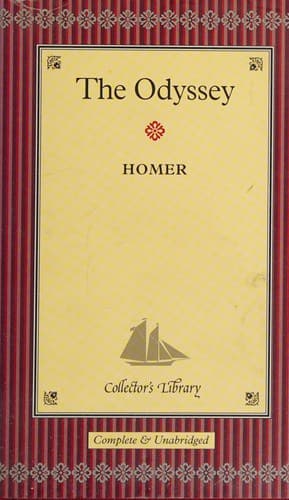
Epic poetry, Greek -- Translations into English; Homer -- Translations into English; Odysseus, King of Ithaca (Mythological character) -- Poetry
When now Aurora, daughter of the dawn,
With rosy lustre purpled o’er the lawn,
The old man early rose, walk’d forth, and sate
On polish’d stone before his palace gate;
With unguents smooth the lucid marble shone,
Where ancient Neleus sate, a rustic throne;
But he descending to the infernal shade,
Sage Nestor fill’d it, and the sceptre sway’d.
His sons around him mild obeisance pay,
And duteous take the orders of the day.
First Echephron and Stratius quit their bed;
Then Perseus, Aretus, and Thrasymed;
The last Pisistratus arose from rest:
They came, and near him placed the stranger-guest.
To these the senior thus declared his will:
“My sons! the dictates of your sire fulfil.
To Pallas, first of gods, prepare the feast,
Who graced our rites, a more than mortal guest
Let one, despatchful, bid some swain to lead
A well-fed bullock from the grassy mead;
One seek the harbour where the vessels moor,
And bring thy friends, Telemachus! ashore
(Leave only two the galley to attend);
Another Laerceus must we send,
Artist devine, whose skilful hands infold
The victim’s horn with circumfusile gold.
The rest may here the pious duty share,
And bid the handmaids for the feast prepare,
The seats to range, the fragrant wood to bring,
And limpid waters from the living spring.”
He said, and busy each his care bestow’d;
Already at the gates the bullock low’d,
Already came the Ithacensian crew,
The dexterous smith the tools already drew;
His ponderous hammer and his anvil sound,
And the strong tongs to turn the metal round.
Nor was Minerva absent from the rite,
She view’d her honours, and enjoyed the sight,
With reverend hand the king presents the gold,
Which round the intorted horns the gilder roll’d.
So wrought as Pallas might with pride behold.
Young Aretus from forth his bridal bower
Brought the full laver, o’er their hands to pour,
And canisters of consecrated flour.
Stratius and Echephron the victim led;
The axe was held by warlike Thrasymed,
In act to strike; before him Perseus stood,
The vase extending to receive the blood.
The king himself initiates to the power:
Scatters with quivering hand the sacred flour,
And the stream sprinkles; from the curling brows
The hair collected in the fire he throws.
Soon as due vows on every part were paid,
And sacred wheat upon the victim laid,
Strong Thrasymed discharged the speeding blow
Full on his neck, and cut the nerves in two.
Down sunk the heavy beast; the females round
Maids, wives, and matrons, mix a shrilling sound.
Nor scorned the queen the holy choir to join
(The first born she, of old Clymenus’ line:
In youth by Nestor loved, of spotless fame.
And loved in age, Eurydice her name).
From earth they rear him, struggling now with death;
And Nestor’s youngest stops the vents of breath.
The soul for ever flies; on all sides round
Streams the black blood, and smokes upon the ground
The beast they then divide and disunite
The ribs and limbs, observant of the rite:
On these, in double cauls involved with art,
Public-domain text, read in full here on John Shaqi.
Reviews
Reviews
No reviews yet
Be the first to share your thoughts on this work.
Join the Discussion
Join the discussion
Sign in to leave a comment or review.
Sign InorCreate an account