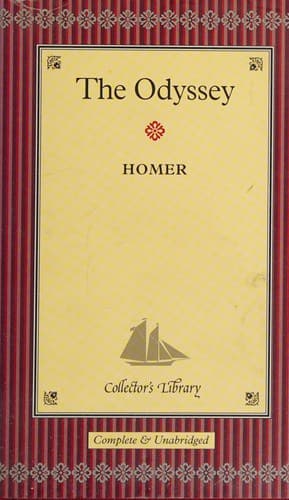
Epic poetry, Greek -- Translations into English; Homer -- Translations into English; Odysseus, King of Ithaca (Mythological character) -- Poetry
Such is, in brief, the substance of the earliest life of Homer we
possess, and so broad are the evidences of its historical
worthlessness, that it is scarcely necessary to point them out in
detail. Let us now consider some of the opinions to which a
persevering, patient, and learned—but by no means consistent—series of
investigations has led. In doing so, I profess to bring forward
statements, not to vouch for their reasonableness or probability.
“Homer appeared. The history of this poet and his works is lost in
doubtful obscurity, as is the history of many of the first minds who
have done honour to humanity, because they rose amidst darkness. The
majestic stream of his song, blessing and fertilizing, flows like the
Nile, through many lands and nations; and, like the sources of the
Nile, its fountains will ever remain concealed.”
Such are the words in which one of the most judicious German critics
has eloquently described the uncertainty in which the whole of the
Homeric question is involved. With no less truth and feeling he
proceeds:—
“It seems here of chief importance to expect no more than the nature of
things makes possible. If the period of tradition in history is the
region of twilight, we should not expect in it perfect light. The
creations of genius always seem like miracles, because they are, for
the most part, created far out of the reach of observation. If we were
in possession of all the historical testimonies, we never could wholly
explain the origin of the Iliad and the Odyssey; for their origin, in
all essential points, must have remained the secret of the poet.”
From this criticism, which shows as much insight into the depths of
human nature as into the minute wire-drawings of scholastic
investigation, let us pass on to the main question at issue. Was Homer
an individual? or were the Iliad and Odyssey the result of an ingenious
arrangement of fragments by earlier poets?
Well has Landor remarked: “Some tell us there were twenty Homers; some
deny that there was ever one. It were idle and foolish to shake the
contents of a vase, in order to let them settle at last. We are
perpetually labouring to destroy our delights, our composure, our
devotion to superior power. Of all the animals on earth we least know
what is good for us. My opinion is, that what is best for us is our
admiration of good. No man living venerates Homer more than I do.”
Public-domain text, read in full here on John Shaqi.
Reviews
Reviews
No reviews yet
Be the first to share your thoughts on this work.
Join the Discussion
Join the discussion
Sign in to leave a comment or review.
Sign InorCreate an account