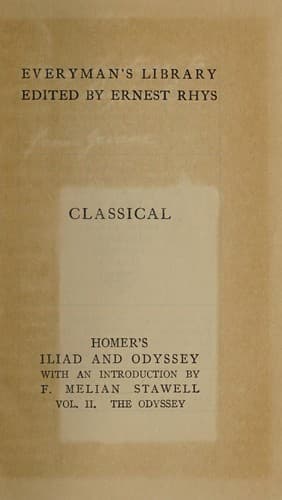
Epic poetry, Greek -- Translations into English; Homer -- Translations into English; Odysseus, King of Ithaca (Mythological character)
Then in heavy displeasure spake unto him Pallas Athene: “God help thee!
thou art surely sore in need of Odysseus that is afar, to stretch forth
his hands upon the shameless wooers. If he could but come now and stand
at the entering in of the gate, with helmet and shield and lances
twain, as mighty a man as when first I marked him in our house drinking
and making merry what time he came up out of Ephyra from Ilus son of
Mermerus! For even thither had Odysseus gone on his swift ship to seek
a deadly drug, that he might have wherewithal to smear his bronze-shod
arrows: but Ilus would in nowise give it to him, for he had in awe the
everliving gods. But my father gave it him, for he bare him wondrous
love. O that Odysseus might in such strength consort with the wooers:
so should they all have swift fate and bitter wedlock! Howbeit these
things surely lie on the knees of the gods, whether he shall return or
not, and take vengeance in his halls. But I charge thee to take counsel
how thou mayest thrust forth the wooers from the hall. Come now, mark
and take heed unto my words. On the morrow call the Achaean lords to
the assembly, and declare thy saying to all, and take the gods to
witness. As for the wooers bid them scatter them each one to his own,
and for thy mother, if her heart is moved to marriage, let her go back
to the hall of that mighty man her father, and her kinsfolk will
furnish a wedding feast, and array the gifts of wooing exceeding many,
all that should go back with a daughter dearly beloved. And to thyself
I will give a word of wise counsel, if perchance thou wilt hearken. Fit
out a ship, the best thou hast, with twenty oarsmen, and go to inquire
concerning thy father that is long afar, if perchance any man shall
tell thee aught, or if thou mayest hear the voice from Zeus, which
chiefly brings tidings to men. Get thee first to Pylos and inquire of
goodly Nestor, and from thence to Sparta to Menelaus of the fair hair,
for he came home the last of the mail-coated Achaeans. If thou shalt
hear news of the life and the returning of thy father, then verily thou
mayest endure the wasting for yet a year. But if thou shalt hear that
he is dead and gone, return then to thine own dear country and pile his
mound, and over it pay burial rites, full many as is due, and give thy
mother to a husband. But when thou hast done this and made an end,
thereafter take counsel in thy mind and heart, how thou mayest slay the
wooers in thy halls, whether by guile or openly; for thou shouldest not
carry childish thoughts, being no longer of years thereto. Or hast thou
not heard what renown the goodly Orestes gat him among all men in that
he slew the slayer of his father, guileful Aegisthus, who killed his
famous sire? And thou, too, my friend, for I see that thou art very
comely and tall, be valiant, that even men unborn may praise thee. But
I will now go down to the swift ship and to my men, who methinks chafe
Public-domain text, read in full here on John Shaqi.
Reviews
Reviews
No reviews yet
Be the first to share your thoughts on this work.
Join the Discussion
Join the discussion
Sign in to leave a comment or review.
Sign InorCreate an account