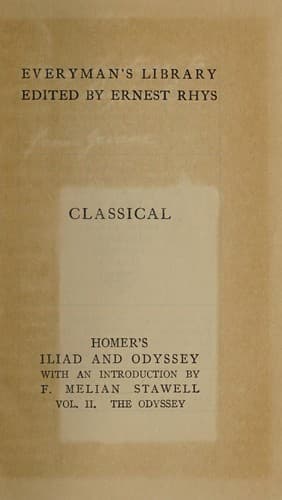
Epic poetry, Greek -- Translations into English; Homer -- Translations into English; Odysseus, King of Ithaca (Mythological character)
“So he spake, and the high-hearted Achaeans ceased from their flight.
Then round thee stood the daughters of the ancient one of the sea,
holding a pitiful lament, and they clad thee about in raiment
incorruptible. And all the nine Muses one to the other replying with
sweet voices began the dirge; there thou wouldest not have seen an
Argive but wept, so mightily rose up the clear chant. Thus for
seventeen days and nights continually did we all bewail thee, immortal
gods and mortal men. On the eighteenth day we gave thy body to the
flames, and many well-fatted sheep we slew around thee, and kine of
shambling gait. So thou wert burned in the garments of the gods, and in
much unguents and in sweet honey, and many heroes of the Achaeans moved
mail-clad around the pyre when thou wast burning, both footmen and
horse, and great was the noise that arose. But when the flame of
Hephaestus had utterly abolished thee, lo, in the morning we gathered
together thy white bones, Achilles, and bestowed them in unmixed wine
and in unguents. Thy mother gave a twy-handled golden urn, and said
that it was the gift of Dionysus, and the workmanship of renowned
Hephaestus. Therein lie thy white bones, great Achilles, and mingled
therewith the bones of Patroclus son of Menoetias, that is dead, but
apart is the dust of Antilochus, whom thou didst honour above all thy
other companions, after Patroclus that was dead. Then over them did we
pile a great and goodly tomb, we the holy host of Argive warriors, high
on a jutting headland over wide Hellespont, that it might be far seen
from off the sea by men that now are, and by those that shall be
hereafter. Then thy mother asked the gods for glorious prizes in the
games, and set them in the midst of the lists for the champions of the
Achaeans. In days past thou hast been at the funeral games of many a
hero, whenso, after some king’s death, the young men gird themselves
and make them ready for the meed of victory; but couldst thou have seen
these gifts thou wouldst most have marvelled in spirit, such glorious
prizes did the goddess set there to honour thee, even Thetis, the
silver-footed; for very dear wert thou to the gods. Thus not even in
death hast thou lost thy name, but to thee shall be a fair renown for
ever among all men, Achilles. But what joy have I now herein, that I
have wound up the clew of war, for on my return Zeus devised for me an
evil end at the hands of Aegisthus and my wife accursed?”
So they spake one to the other. And nigh them came the Messenger, the
slayer of Argos, leading down the ghosts of the wooers by Odysseus
slain, and the two heroes were amazed at the sight and went straight
toward them. And the soul of Agamemnon, son of Atreus, knew the dear
son of Melaneus, renowned Amphimedon, who had been his host, having his
dwelling in Ithaca. The soul of the son of Atreus spake to him first,
saying:
Public-domain text, read in full here on John Shaqi.
Reviews
Reviews
No reviews yet
Be the first to share your thoughts on this work.
Elsewhere in the archive
Join the Discussion
Join the discussion
Sign in to leave a comment or review.
Sign InorCreate an account