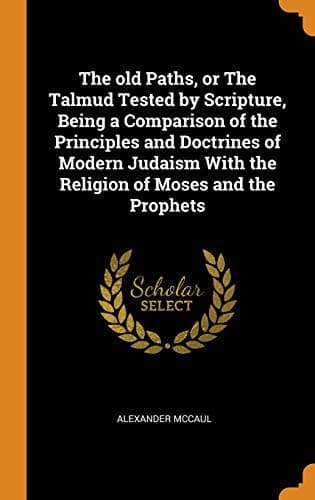
The old paths, or the Talmud tested by Scripture: Being a comparison of the principles and doctrines of modern Judaism with the religion of Moses and the prophetsMcCaul, Alexander
Religion
The old paths, or the Talmud tested by Scripture: Being a comparison of the principles and doctrines of modern Judaism with the religion of Moses and the prophets
McCaul, Alexander
Judaism -- Works to 1900
מניחין קדרה על גבי האש או בשר בתנור או על גבי גחלים והם מתבשלים והולכין
כל השבת ואוכלין אותו בשבת ויש בדבר זה דברים שהם אסורים גזירה שמא יחתה
בגחלים בשבת , כיצד תבשיל שלא בשל כל צרכו וחמין שלא הוחמו כל צרכן או
תבשיל שבישל כל צרכו וכל זמן שמצטמק הוא יפה לו אין משהין אותו על גבי האש
בשבת אע׳׳פ שהונח מבעוד יום , גזירה שמא יחתה בגחלים כדי להשלים בשולו או
כדי לצמקו , לפיכך אם גרף האש או שכסה אש הכירה באפר או בנעורת הפשתן הדקה
או שעממו הגחלים שהרי הן כמכוסין באפר או שהסיקוה בקש או בגבבה או בגללי
בהמה דקה שהרי אין שם גחלים בוערות הרי זה מותר לשהות עליה שהרי הסיח דעתו
מזה ואין גוזרין שמא יחתה באש ׃
“It is lawful to leave a pot on the fire, or meat in the oven or upon
the coals, and although the cooking thus continues, it is lawful to eat
them on the Sabbath. But in this matter there are some things forbidden,
and the cause of the prohibition is lest any man should stir the fire on
the Sabbath. For example, food that has not been cooked as much as it
requires, or hot water that has not been sufficiently heated, or food
which has had the requisite cooking, but which improves all the time
that it is left to stew, must not be left on the fire on the Sabbath,
even though it may have been placed there, whilst it was yet day on the
Friday. This has been decreed, lest one should stir the coals in order
to finish the cooking thereof, or to stew it. Therefore, if the fire be
swept up, or covered with ashes, or with the coarse part of flax, or if
the coals have ceased to glow, for then they are looked upon as covered
with ashes, or if the fire had been made with straw or stubble, or with
the dung of small cattle, then, as there are no burning coals, it is
lawful to leave the food there on the Sabbath, for in this case the
man’s mind will be turned away from the cooking, and the only object of
the decree is, lest the fire should be stirred.” (Hilchoth Shabbath, c.
iii. 3.) No one can deny that this passage prescribes the merest outward
observances. The general principle is that it is not lawful to stir the
fire on the Sabbath, for that would be doing work, and from this follow
those other prohibitions of all things which might tempt a man to be
guilty of this grave offence. But they all refer to outward acts, from
which it is easy for any one, without any great exertion of self-denial,
or any advance in moral discipline, to abstain, and yet he has all the
merit and satisfaction of the most self-denying piety, and thinks that
he is thereby paying a part of the price of his salvation, and making
atonement for the gravest moral transgressions of which he may have been
guilty during the week. Take, again, the following precepts, and say
whether they be not of the very same character:—
Public-domain text, read in full here on John Shaqi.
Reviews
Reviews
No reviews yet
Be the first to share your thoughts on this work.
Elsewhere in the archive
Join the Discussion
Join the discussion
Sign in to leave a comment or review.
Sign InorCreate an account