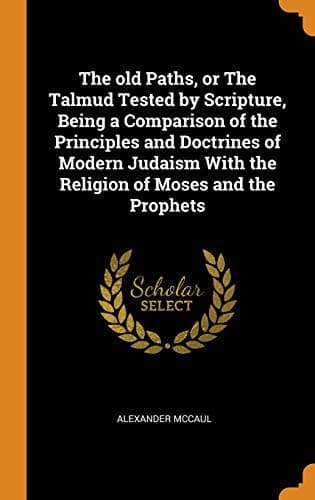
The old paths, or the Talmud tested by Scripture: Being a comparison of the principles and doctrines of modern Judaism with the religion of Moses and the prophetsMcCaul, Alexander
Religion
The old paths, or the Talmud tested by Scripture: Being a comparison of the principles and doctrines of modern Judaism with the religion of Moses and the prophets
McCaul, Alexander
Judaism -- Works to 1900
מצות עשה ליתן צדקה לעניי ישראל כפי מה שראוי לעני אם היתה יד הנותן משגת ,
שנאמר פתח תפתח את ידך לו , ונאמר והחזקת בו גר ותושב וחי עמך ונאמר וחי
אחיך עמך , וכל הרואה עני מבקש והעלים עיניו ממנו ולא נתן לו צדקה עבר בלא
תעשה שנאמר לא תאמץ את לבבך תקפוץ את ידך מאחיך האביון ; לפי מה שיחסר העני
אתה מצווה ליתן לו , אם אין לו כסות מכסים אותו , אם אין לו כלי בית קונין
לו , אם אין לו אשה משיאין אותו , ואם היתה אשה משיאין אותה לאיש , אפילו
היה דרכו של זה העני לרכוב על הסוס ועבד רץ לפניו והעני ירד מנכסיו קונין
לו סוס לרכוב עליו ועבד לרוץ לפניו שנאמר די מחסורו אשר יחסר לו , מצווה
אתה להשלים חסרונו , ואין אתה מצווה להצשירו . יתום שבא להשיאו אשה ,
שוכרין לו בית ומציעים לו מטה וכל כלי תשמישו ואחר כך משיאין לו אשה , בא
העני ושאל די מחסורו ואין יד הנותן משגת נותנין לו כפי השגת ידו וכמה עד
חמישית נכסיו מצוה מן המובחר ואחד מעשרה בנכסיו בינוני , פחות מכ עין רעה ׃
“It is an affirmative precept to give alms to the poor of Israel,
according as the poor have need, if in the power of the giver; for it is
said, ‘Thou shalt open thine hand wide to him’ (Deut. xv. 8); and again,
‘Thou shalt relieve him, a proselyte[34] or a sojourner, that he may
live with thee;’ and again, ‘That thy brother may live with thee.’ (Lev.
xxv. 35, 36.) Whosoever sees a poor man begging, and shuts his eyes
against him, and does not give him alms, transgresses a negative
precept: for it is said, ‘Thou shalt not harden thine heart nor shut
thine hand from thy poor brother.’ (Deut. xv. 7.) According as the poor
hath need, thou art commanded to give. If he has no clothing, he is to
be clothed; if he has no furniture, it is to be bought for him; if he
has no wife, he is to be helped to marry one; if a woman, she is to be
assisted in getting a husband: yea, if it had been the poor man’s custom
to ride upon a horse, and to have a servant running before him—but he is
now come down in the world,—it is a duty to buy him a horse to ride, and
a servant to run before him, for it is said, ‘Sufficient for his need,
in that which he wanteth’ (Deut. xv. 8); and thou art commanded
perfectly to relieve his want, but not to make him rich. If an orphan
apply for assistance in order to marry, it is a duty to hire a house for
him, and to provide all necessary furniture, and afterwards to help him
to marry. If a poor man come and ask for relief, and the giver has not
as much as he wants, he ought to give what his means afford. How much?
He that gives a fifth of his property fulfils the commandment well. He
that gives one part in ten fulfils it in a middling manner. He that
gives less must be regarded as a person with an evil eye.” (Hilchoth
Matt’noth Aniim, cvii. 1-5.) In this definition of the nature and extent
of the duty of almsgiving, there is much that is good and worthy of our
admiration, especially in this selfish and money-loving age, when
poverty is regarded, if not punished, as a crime, and the poor are, by
many, considered as unworthy of all domestic comfort. Without binding
Public-domain text, read in full here on John Shaqi.
Reviews
Reviews
No reviews yet
Be the first to share your thoughts on this work.
Elsewhere in the archive
Join the Discussion
Join the discussion
Sign in to leave a comment or review.
Sign InorCreate an account