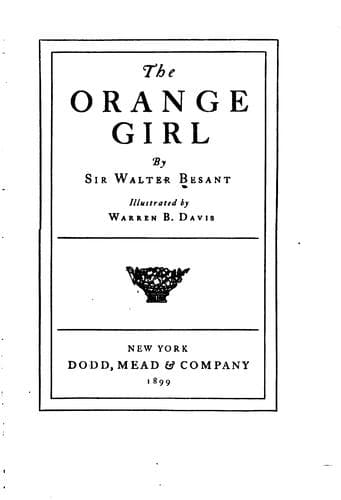
London (England) -- History -- 18th century -- Fiction
The Counsel then called half a dozen witnesses in succession. They were
turnkeys from York, Winchester, Reading and Portsmouth and other places.
They identified the Rev. Dr. Samuel Carstairs, D.D., as a person
notoriously engaged in frauds for which an educated person was
necessary. He had been imprisoned for two years at Winchester for
embezzlement: for a twelvemonth with a flogging at York for fraud: he
was whipped through the High Street of Portsmouth and down to Point and
back again for similar practices. They also identified the Captain as a
rogue from tender years: hardly a whipping-post anywhere but knew the
sound of his voice: hardly a prison in which he had not passed some of
his time.
And now the case looked brighter. Everyone was interested, from the
Aldermen to the Jury: it was a case of surprises: only Serjeant Cosins
stood with his papers in his hand looking perplexed and annoyed. So far
there was no doubt about the two fellows, the authors of the charge,
being notorious and arrant rogues. A very pitiful figure they cut, as
they sat side by side on the witnesses' bench. Even their own friends in
the gallery were laughing at them, for the admiration of the rogue is
for successful roguery, while for detected roguery he has nothing but
contempt.
Then the Counsel called John Ramage. He said that he was an accountant
in the counting-house of Messrs. Halliday Brothers: that in that
capacity he knew the position of the House: that in two years the
managing partner, Mr. Matthew Halliday, had reduced the business to a
state of insolvency: that they might become bankrupts at any moment:
that creditors were pressing, and the end could not be far off. He went
on to state that he revealed the secrets of his office because he was
informed that the knowledge was necessary for the defence of Mr. William
Halliday, and that the safety and innocence of his late master's only
son were of far more importance to him than the credit of the House. And
here the tears came into his eyes. This, however, was the least
important part of the case. For he went on to depose that the position
of his desk near the door of Mr. Matthew's office enabled him to hear
all that went on: that Mr. Probus was constantly engaged with Mr.
Matthew: that every day there were complaints and quarrels between them:
that Mr. Probus wanted his money back, and that Mr. Matthew could not
pay him: that every day they ended with the regret that they could not
touch this sum of money waiting for the survivor: that every day they
sighed to think what a happy event it would be for them both if Mr.
William Halliday were dead. That, one day, Mr. Probus said that there
were many ways for even a young man to die: he might, for instance, fall
into the hands of the law: to this Mr. Matthew gave no reply, but when
he was alone began to drink. That Mr. Probus returned the next day with
Mr. Merridew, who said that the job was easy and should be done, but he
Public-domain text, read in full here on John Shaqi.
Reviews
Reviews
No reviews yet
Be the first to share your thoughts on this work.
Elsewhere in the archive
Join the Discussion
Join the discussion
Sign in to leave a comment or review.
Sign InorCreate an account