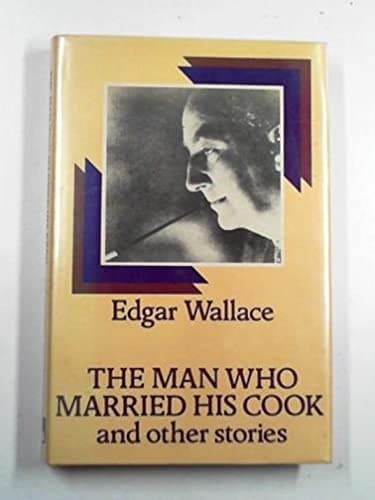
Detective and mystery stories; English fiction -- 20th century
The Official Memory sits in a big office that overlooks the Thames
Embankment. It is embodied in a man who checks, day by day, hour by
hour, and minute by minute, the dark happenings of the world. He is
an inconsiderable person, as personalities go, for he enters no
witness-box to testify against a pallid prisoner. He grants no
interviews to curious newspaper reporters, he appears in no magazines
as a picturesque detector of crime, but silently, earnestly, and
remorselessly he marks certain little square cards, makes grim
entries in strange ledgers, consults maps, and pores over foreign
newspaper reports. Sometimes he prepares a _dossier_ as a cheap-jack
makes up his prize packet, with a paper from this cabinet, a
photograph from that drawer, a newspaper-cutting, a docketed
deposition with the sprawling signature of a dying man, a
finger-print card--and all these he places in a large envelope, and
addresses it in a clerkly hand to Chief Inspector So-and-So, or to
the "Director of Public Prosecutions." When the case is over and a
dazed man sits in a cell at Wormwood Scrubbs pondering his sentence,
or, as it sometimes happens, when convict masons are at work carving
initials over a grave in a prison-yard, the envelope comes back to
the man in the office, and he sorts the contents jealously. It is
nothing to him, the sum of misery they have cast, or the odour of
death that permeates them. He receives them unemotionally,
distributes the contents to their cabinets, pigeon-holes,
guard-books, and drawers and proceeds to make up yet another
_dossier_.
All things come to him; crime in all its aspects is veritably his
stock-in-trade.
When George T. Baggin disappeared in 1908, his simple arrangement of
indexing showed the connection between the passing of Lucas Damant,
six months later, and the obliteration of Gerald Grayson. The
Official Memory knew, too, what the public had no knowledge of:
namely, that there had been half-a-dozen minor, but no less
mysterious, flittings in the space of two years.
Their stories, briefly and pithily told, were inscribed on cards in
the silent man's cabinet. Underneath was the significant word,
"Incomplete." They were stories to be continued; some other hand
than his might take up the tale at a future time, and subscribe
"Finis" to their grim chapters. He was satisfied to carry the story
forward as far as his information allowed him.
Public-domain text, read in full here on John Shaqi.
Reviews
Reviews
No reviews yet
Be the first to share your thoughts on this work.
Join the Discussion
Join the discussion
Sign in to leave a comment or review.
Sign InorCreate an account