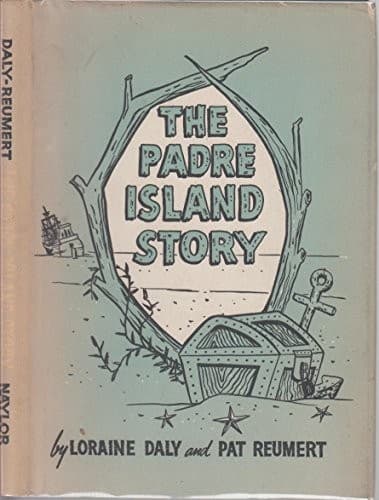
Padre Island (Tex.); Rio Grande Valley (Colo.-Mexico and Tex.) -- Description and travel
Dispatched to Spain by Cortez of Mexico in the summer of 1553, a fleet
of twenty treasure ships, laden with gold, silver and gems stolen from
Aztec shrines, sailed from Vera Cruz, Mexico, with about two thousand
persons aboard. Among them were those mentioned earlier in the ill-fated
“Flight of the Three Hundred.” The ships sailed head-on into a hurricane
off the Bahamas. Three were sunk, several were able to skirt the storm,
but thirteen of the vessels, with approximately three hundred aboard,
fled to the west and went aground on Padre Island. Most of the
passengers made it safely to the beach, only to be met by the ferocious
Karankawas. Without supplies, they fled southward, hoping to safely
reach Tampico, Mexico. For awhile they were able to buy their lives and
much needed time by bribing the savages with their beautiful garments.
Unhappily, however, many met death from arrows, starvation or illness.
Only a few survivors reached Port Isabel, and only one person, a priest,
reached Tampico. Another survivor, Francisco Vasquez, sustained himself
after discovering that fresh water could be found on Padre by digging
only a shallow hole in the island sand. Vasquez directed a salvage fleet
of Yucatecan Indian divers to the site of the wrecks some months later.
All but one ship was found, and it was known to be loaded with Spanish
doubloons and bars of gold.
In December, 1904, A. H. Meuly claims to have found the ship and marked
the spot. When he returned, his markers were gone. He reported he found
a deposit of gold, worth an estimated million dollars, in the skeleton
of an old galleon thirty-five miles from Corpus Christi Pass. He
believed the hull to be the remains of Cortez’s vessel.
Devil’s elbow, a strange curve in Padre Island’s shore-line which faces
the Gulf, is so-named because as early as the sixteenth century it had
become the grounding point for many an ill-fated, floundering vessel.
These ships often carried large amounts of money, in the form of gold
and silver coins. When the wooden kegs carrying the coins rotted, the
money was washed ashore. (It is an intriguing point—and undeniable
fact—that due to the prevailing water currents sunken objects in the
Gulf have a tendency to wash ashore on Padre Island.)
In 1811, a Spanish ship with half a million dollars in its stronghold
was sunk by Lafitte. In 1873, the steamer _S. L. Lee_ sank off Brazos
Santiago Pass with a hundred thousand dollars aboard. The following year
the _Little Fleeta_ carried twenty thousand dollars down with her. In
1875, at least three vessels, the _Texas Ranger_, _Ida Lewis_, and
_Reine des Mers_, were lost off Padre with almost half a million known
to have been in their holds. The _Clara Woodhouse_ carried eighty
thousand dollars to the bottom with her, while the _Maria Theresa_
foundered off Padre Island with a hundred thousand dollars in the
Captain’s cabin.
Public-domain text, read in full here on John Shaqi.
Reviews
Reviews
No reviews yet
Be the first to share your thoughts on this work.
Join the Discussion
Join the discussion
Sign in to leave a comment or review.
Sign InorCreate an account