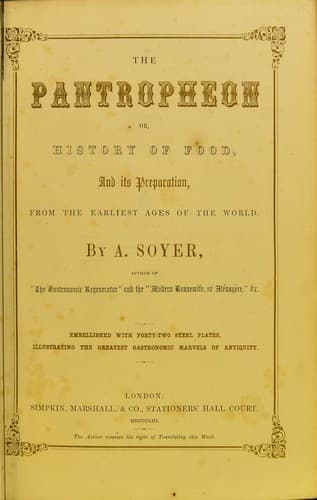
The Pantropheon; Or, History of Food, Its Preparation, from the Earliest Ages of the WorldSoyer, Alexis
History
The Pantropheon; Or, History of Food, Its Preparation, from the Earliest Ages of the World
Soyer, Alexis
Cooking; Food; Gastronomy
The reply to this is, that Seneca, the pedant, should have thundered
against the stomach, which alone is guilty (he has sometimes done so);
that this atrabilarious preceptor of Nero, attacked with an incurable
consumption, could only eat very little, which much enraged him; and
that his imprecations on the subject of the excessive riches and
prodigious luxury of the Romans of his age, neither hindered him from
possessing, and unceasingly increasing, a more than royal fortune; nor
from feeding--well or ill--several thousand slaves; nor from pompously
displaying in his palace five hundred tables--only five hundred--of the
most elaborate workmanship, of the rarest wood, all alike, and
ornamented with precious incrustations.[XXII-4]
How often have people extolled the Lacedæmonians and their legislator,
Lycurgus. Well, Lycurgus mercilessly commanded poor little children to
fast when they looked fresh and fat.[XXII-5] Strange law-giver of a
strange people, who never learned to eat, and yet who invented the
celebrated “black sauce,” the _jus nigrum_, for which the entrails of
the hare served as the foundation. So true it is that cookery always
preserves certain imprescriptible rights over the most fervent disciples
of frugality.
Moralists do not cease to repeat that Rome would never have had
sumptuary laws had it not been corrupted by cooks from Athens and
Syracuse. This is an error. All the ordinances of the consuls proscribed
profusion, excess--in a word, all the ruinous expenses of a passionate
and ridiculous gastrophagy,[XXII-6] at the same time, respecting the
magiric art itself; that is to say, that industrious chemistry which
composes, decomposes, combines, and mixes--in a word, prepares different
substances which gluttony, delicacy, the fashion, or luxury may confide
to it for the space of a few minutes.
Why render the cook responsible for the extravagant tastes and follies
of his age? Is it for him to reform mankind? Has he either the means or
the right?
What is asked of him? and what can be asked? To understand exactly the
properties of everything he employs, to perfect, and correct, if
necessary, the savours on which he operates; to judge with a true
taste, to degustate with a delicate palate, to join the skilful address
of the hand, and the prompt and comprehensive glance, to the bold but
profound conceptions of the brain; and above all--it cannot be too often
repeated--to identify himself so well with the habits, the wants, even
the caprices and gastronomic eccentricities, of those whose existence he
embellishes, that he may be able, not to obey them, but to guess them,
and even have a presentiment of them.[XXII-7]
Public-domain text, read in full here on John Shaqi.
Reviews
Reviews
No reviews yet
Be the first to share your thoughts on this work.
Elsewhere in the archive
Join the Discussion
Join the discussion
Sign in to leave a comment or review.
Sign InorCreate an account