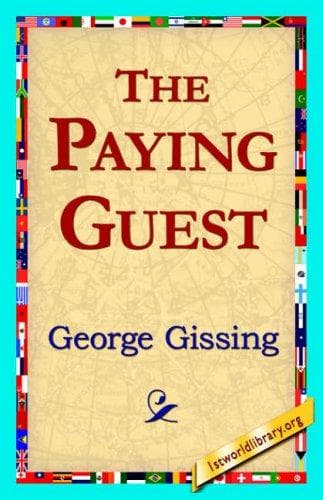
England -- Social life and customs -- 19th century -- Fiction; English fiction -- 19th century
Emmeline talked much of the delightful proximity of the Downs; one
would have imagined her taking long walks over the breezy uplands to
Banstead or Epsom, or yet further afield The fact was, she saw no
more of the country than if she had lived at Brixton. Her windows
looked only upon the surrounding houses and their garden foliage.
Occasionally she walked along the asphalte pavement of the Brighton
Road--a nursemaids' promenade--as far as the stone which marks
twelve miles from Westminster Bridge. Here, indeed, she breathed the
air of the hills, but villas on either hand obstructed the view, and
brought London much nearer than the measured distance. Like her
friends and neighbours, Emmeline enjoyed Sutton because it was a
most respectable little portion of the great town, set in a purer
atmosphere. The country would have depressed her.
In this respect Miss Derrick proved a congenial companion. Louise
made no pretence of rural inclinations, but had a great liking for
tree-shadowed asphalte, for the results of elaborate horticulture,
for the repose and the quiet of villadom.
'I should like to have a house just like this,' she declared, on her
first evening at "Runnymede," talking with her host and hostess out
in the garden. 'It's quite big enough, unless, of course, you have a
very large family, which must be rather a bore.' She laughed
ingenuously. 'And one gets to town so easily. What do you pay for
your season-ticket, Mr. Mumford? Oh, well! that isn't much. I almost
think I shall get one.'
'Do you wish to go up very often, then?' asked Emmeline, reflecting
on her new responsibilities.
'Oh! not every day, of course. But a season-ticket saves the bother
each time, and you have a sort of feeling, you know, that you can be
in town whenever you like.'
It had not hitherto been the Mumfords' wont to dress for dinner, but
this evening they did so, and obviously to Miss Derrick's
gratification. She herself appeared in a dress which altogether
outshone that of her hostess. Afterwards, in private, she drew
Emmeline's attention to this garb, and frankly asked her opinion of
it.
'Very nice indeed,' murmured the married lady, with a good-natured
smile. 'Perhaps a little--'
'There, I know what you're going to say. You think it's too showy.
Now I want you to tell me just what you think about
everything--everything. I shan't be offended. I'm not so silly. You
know I've come here to learn all sorts of things. To-morrow you
shall go over all my dresses with me, and those you don't like I'll
get rid of. I've never had anyone to tell me what's nice and what
isn't. I want to be--oh, well, you know what I mean.'
'But, my dear,' said Emmeline, 'there's something I don't quite
understand. You say I'm to speak plainly, and so I will. How is it
that you haven't made friends long ago with the sort of people you
wish to know? It isn't as if you were in poor circumstances.'
Public-domain text, read in full here on John Shaqi.
Reviews
Reviews
No reviews yet
Be the first to share your thoughts on this work.
Join the Discussion
Join the discussion
Sign in to leave a comment or review.
Sign InorCreate an account