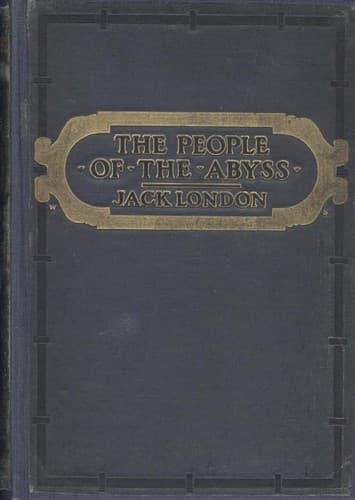
London (England) -- Social conditions; Poor -- England -- London
Small as the acreage is this year, a poor summer and terrible storms
reduced the yield. This misfortune is divided between the people who
own hops and the people who pick hops. The owners perforce must put up
with less of the nicer things of life, the pickers with less grub, of
which, in the best of times, they never get enough. For weary weeks
headlines like the following have appeared in the London papers.—
TRAMPS PLENTIFUL, BUT THE HOPS ARE FEW AND NOT YET READY.
Then there have been numberless paragraphs like this:—
From the neighbourhood of the hop fields comes news of a distressing
nature. The bright outburst of the last two days has sent many hundreds
of hoppers into Kent, who will have to wait till the fields are ready
for them. At Dover the number of vagrants in the workhouse is treble
the number there last year at this time, and in other towns the
lateness of the season is responsible for a large increase in the
number of casuals.
To cap their wretchedness, when at last the picking had begun, hops and
hoppers were well-nigh swept away by a frightful storm of wind, rain,
and hail. The hops were stripped clean from the poles and pounded into
the earth, while the hoppers, seeking shelter from the stinging hail,
were close to drowning in their huts and camps on the low-lying ground.
Their condition after the storm was pitiable, their state of vagrancy
more pronounced than ever; for, poor crop that it was, its destruction
had taken away the chance of earning a few pennies, and nothing
remained for thousands of them but to “pad the hoof” back to London.
“We ayn’t crossin’-sweepers,” they said, turning away from the ground,
carpeted ankle-deep with hops.
Those that remained grumbled savagely among the half-stripped poles at
the seven bushels for a shilling—a rate paid in good seasons when the
hops are in prime condition, and a rate likewise paid in bad seasons by
the growers because they cannot afford more.
I passed through Teston and East and West Farleigh shortly after the
storm, and listened to the grumbling of the hoppers and saw the hops
rotting on the ground. At the hothouses of Barham Court, thirty
thousand panes of glass had been broken by the hail, while peaches,
plums, pears, apples, rhubarb, cabbages, mangolds, everything, had been
pounded to pieces and torn to shreds.
Public-domain text, read in full here on John Shaqi.
Reviews
Reviews
No reviews yet
Be the first to share your thoughts on this work.
Elsewhere in the archive
Join the Discussion
Join the discussion
Sign in to leave a comment or review.
Sign InorCreate an account