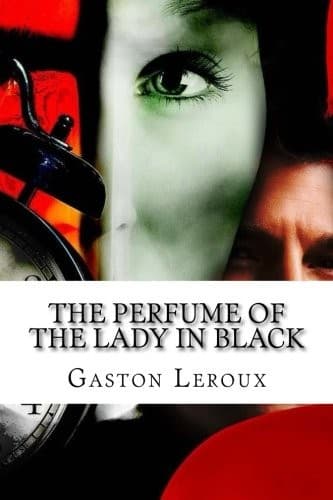
Detective and mystery stories; Rouletabille, Joseph (Fictitious character) -- Fiction
As soon as he reached the capital, he looked up M. Gaston Leroux, and
recalled himself to the latter’s memory, telling him that, although
he felt no particular liking for the life, which he considered rather
a lazy one for a man who liked to be up and doing, he had decided to
become a journalist. And he fairly demanded that his old acquaintance
should at once give him a trial as a reporter.
Leroux tried to turn the youth from his project. At last, tired of his
persistent requests, the editor said:
“Well, my lad, since you have nothing special to do just now, go and
find the left foot of the body in the Rue Oberkampf.”
And with these words, M. Leroux turned away, leaving poor Rouletabille
standing there with half a dozen young reporters tittering around him.
But the boy was not daunted in the least. He searched through the files
of the paper and found out that the _Epoch_ was offering a large
reward to the person who would bring to its office the foot which was
missing from the mutilated body of a woman, which had been found in the
Rue Oberkampf.
The rest we know. In “The Mystery of the Yellow Room,” I have told
how Rouletabille succeeded on this occasion, and in what manner there
revealed itself to him his own singular calling--that of always
beginning to reason a matter out from the point where others had
finished.
I have told, too, by what chance he was led one evening to the Elysee,
where he inhaled as he passed by the perfume of the Lady in Black. He
realized then that it was Mlle. Stangerson who had been his visitor at
the school, and for whom he had been seeking so long. What more need I
add? Why speak of the sensations which his knowledge as to the wearer
of the perfume aroused in the heart of Rouletabille during the events
at the Glandier, and, above all, after his trip to America? They may be
easily guessed. How simple a thing now to understand his hesitations
and his whims! The proofs brought by him from Cincinnati in regard
to the child of the woman who had been Jean Roussel’s wife had been
sufficiently explicit to awaken in his mind a suspicion that he himself
might be that child, but not enough so to render him certain of the
fact. However, his instinct drew him so strongly to the professor’s
daughter that he could scarcely resist his longing to throw himself
into her arms and press her to his heart and cry out to her: “You are
my mother! you are my mother!”
Public-domain text, read in full here on John Shaqi.
Reviews
Reviews
No reviews yet
Be the first to share your thoughts on this work.
Join the Discussion
Join the discussion
Sign in to leave a comment or review.
Sign InorCreate an account